- 0
- 973 words
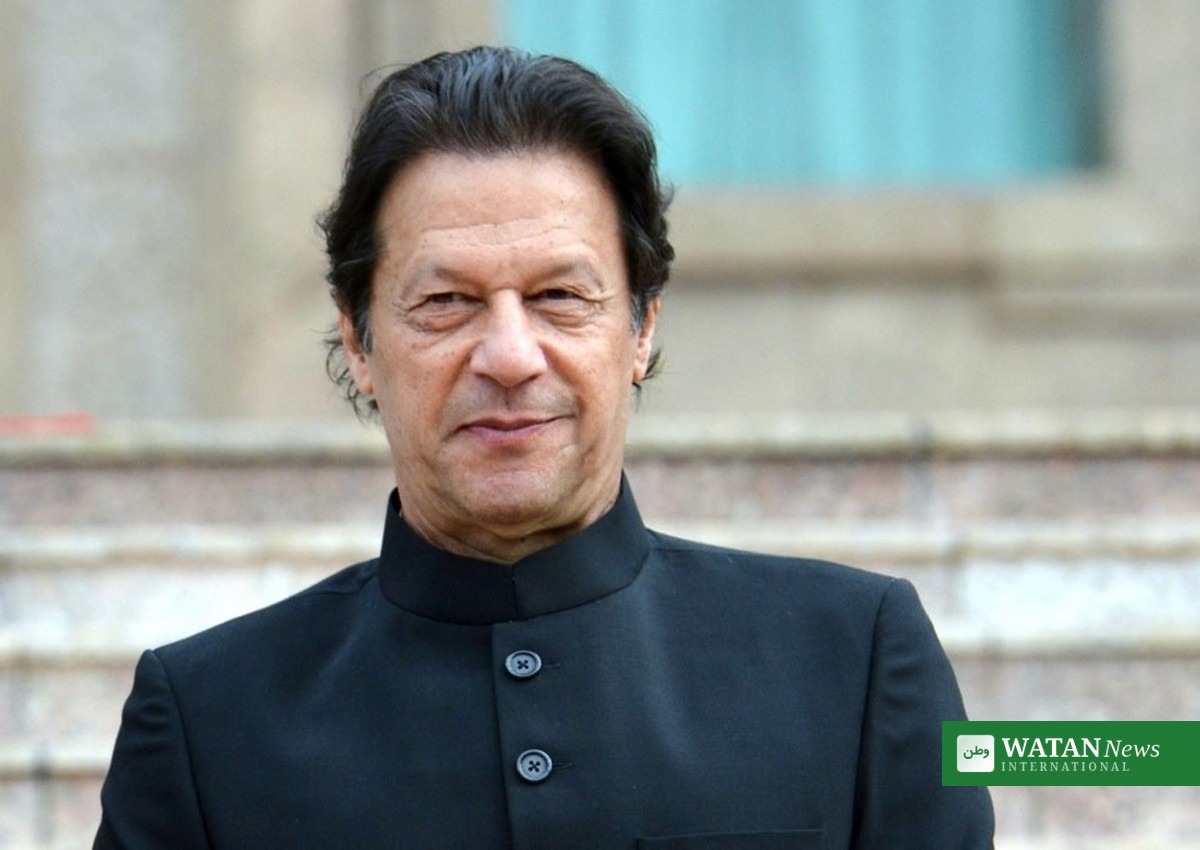
Pakistan’s jailed former prime minister Imran Khan has appealed to the country’s top judges for urgent medical treatment for himself and his wife, Bushra Bibi, warning that doctors have told him he is highly vulnerable to a brain haemorrhage and cardiac arrest. The Imran Khan medical appeal was made in an open letter shared on Monday, in which the 74-year-old wrote: “At seventy-four, this unrelenting state is taking me to a place from which I may not return alive.”
Khan, who has been held in Rawalpindi’s Adiala prison since August 2023, said his health and his wife’s health were failing and that court orders for their treatment had not been implemented. The health claims in the letter are Khan’s own account and have not been independently verified against medical records.
FAKTA
- Who: Imran Khan, 74, former prime minister of Pakistan, jailed since August 2023 in Adiala prison, Rawalpindi
- What: An open letter dated 16 November 2026 to the chief justices of the Supreme Court, the Federal Constitutional Court and the Islamabad High Court, asking for urgent medical treatment for himself and his wife, Bushra Bibi
- Health claims: Blood pressure rose from 130 to 150 to 170, then 192 and 193 on 10 November; doctors warned of brain haemorrhage and cardiac arrest; heart already damaged; 85 per cent of sight lost in his right eye; his wife could lose her sight permanently
- Court order: The Supreme Court ordered on 18 August that Khan be moved to Shifa International Hospital within two days; Khan says the order was never carried out
- Government position: Authorities say Khan has received medical care, including hospital visits for eye treatment; ministers dispute his account
What the Imran Khan medical appeal says
The letter was shared on social media on Monday by Khan’s lawyer, Barrister Salman Safdar, who said he had spent three hours with Khan at Adiala jail on 11 November and had written the letter on the instructions and notes the former prime minister gave him then. Safdar had also met Khan on 2 November.
In the letter, Khan wrote that in solitary confinement his blood pressure had become uncontrolled, rising from 130 to 150 and then 170, before reaching 192 and 193 on 10 November. “The doctors now tell me that I am highly vulnerable to a brain haemorrhage and cardiac arrest, and that my heart has already suffered damage,” he wrote.
Khan also wrote that he had lost 85 per cent of the vision in his right eye, a condition identified as right central retinal vein occlusion that first emerged in late January and was discovered by a court-appointed amicus curiae in February 2026. He said he had been held in isolation for up to 22 hours a day since 20 December 2025 and that the prolonged confinement had taken a serious toll on his mental health. A medical board recommendation to allow him more contact with his family had not been followed, he added.
His wife’s failing sight was what compelled him to write, Khan said. He wrote that Bushra Bibi’s retina detached in April and that she had surgery on the eye, and that she could lose her sight permanently. “I spent my life building hospitals so that those who could not afford treatment would receive it free of cost. Today, I ask only that my wife and I be treated,” he wrote.
“I do not ask your Lordships for any favour. All I request as justice is the implementation of the orders of the honourable SC and proper treatment for our medical conditions,” Khan wrote. “I will only remain able to prove my innocence if I stay alive.”
The unimplemented August court order
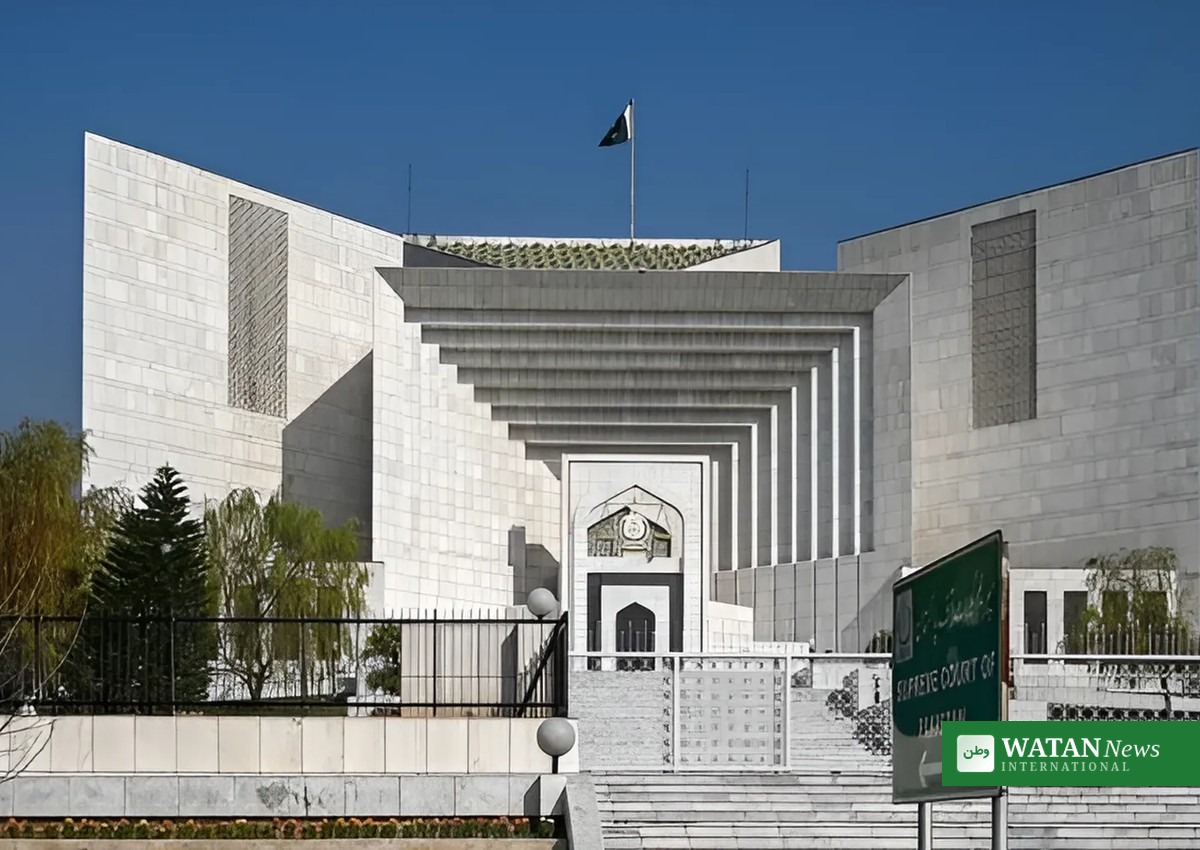
A central demand in the letter concerns a Supreme Court order issued on 18 August by a three-member bench. The court directed the authorities to shift Khan to Islamabad’s Shifa International Hospital within two days, have him examined by a medical board including a cardiologist and an eye specialist, and allow him weekly meetings with his family and twice-weekly phone calls with his sons.
“That order has not been implemented,” Khan wrote. He said his case now rests on the docket of the Federal Constitutional Court, awaiting a hearing, and that his appeal in the Al-Qadir case was being taken up ahead of older appeals concerning his health and the unimplemented orders.
Government response
Authorities said Khan was taken to hospital for an eye check-up last week and returned to his cell. Information Minister Attaullah Tarar said Khan was taken to the Pakistan Institute of Medical Sciences (PIMS) between 20 and 21 August for a detailed examination involving doctors from Shifa International.
More recently, Khan was taken to PIMS overnight on 10-11 November for an eye procedure. A hospital official told Dawn that he received an anti-VEGF injection, his vital parameters were normal, and he remained clinically stable before and after the procedure.
Parliamentary Affairs Minister Tariq Fazal Chaudhry said the claims of denied medical facilities were “contrary to the facts”, adding that Khan had been taken to PIMS eight times for medical examinations and that, according to medical assessments, his blood pressure was satisfactory. He called the appeal a disguised request for an NRO, or National Reconciliation Ordinance.
Background
Khan has been in prison since August 2023 and has faced multiple corruption cases since losing power in a no-confidence vote in 2022. All but one of his convictions have been suspended or overturned, with appeals pending. Khan denies wrongdoing and says the charges are politically motivated, a claim the government denies.
He and Bushra Bibi were sentenced to 17 years in prison on 20 December 2025 in the Toshakhana-II case. Read more on the same story at watannews.dk, and our earlier report on clashes involving Imran Khan’s supporters in Islamabad.
Author

usmanch0013@gmail.com
Related Posts
3,645 Journalists Are Covering COP31 — the Second-Biggest Press Corps in COP History
- 0
- 1,087 word
A total of 3,645 journalists have registered to cover COP31 in Antalya — the second-largest press corps in COP history — as...
Read out all
Türkiye Is Running Out of Water as COP31 Turns to Nature and Land
- 0
- 1,261 word
Half of Türkiye's population faces water shortages by 2030 and 186 of the country's 250 lakes have dried up in 50 years,...
Read out all
Lapid Accuses Netanyahu of Attempted Coup Over Election-Day Action Against Arab Parties
- 0
- 494 words
Opposition leader Yair Lapid has accused caretaker Prime Minister Benjamin Netanyahu of an attempted coup after reports of police action against Arab...
Read out all
Houthis Blame Saudi Arabia for Strikes That Killed Three, Including a Child, in Yemen
- 0
- 497 words
Houthi health authorities say three people, including a child, were killed and 15 wounded in two strikes in Sanaa and Amran province...
Read out all
More Than 50 Countries Back COP31 Geothermal Ambition 2050
- 0
- 1,439 word
More than 50 countries have backed the COP31 Global Geothermal Ambition 2050, the COP31 Presidency said on 16 November — a collective...
Read out all
Ukraine Strikes Ilsky Oil Refinery in Southern Russia
- 0
- 498 words
Ukraine struck the Ilsky oil refinery in Russia's Krasnodar region overnight, hitting crude distillation units and a petrol production complex, Ukraine's General...
Read out all