- 0
- 693 words
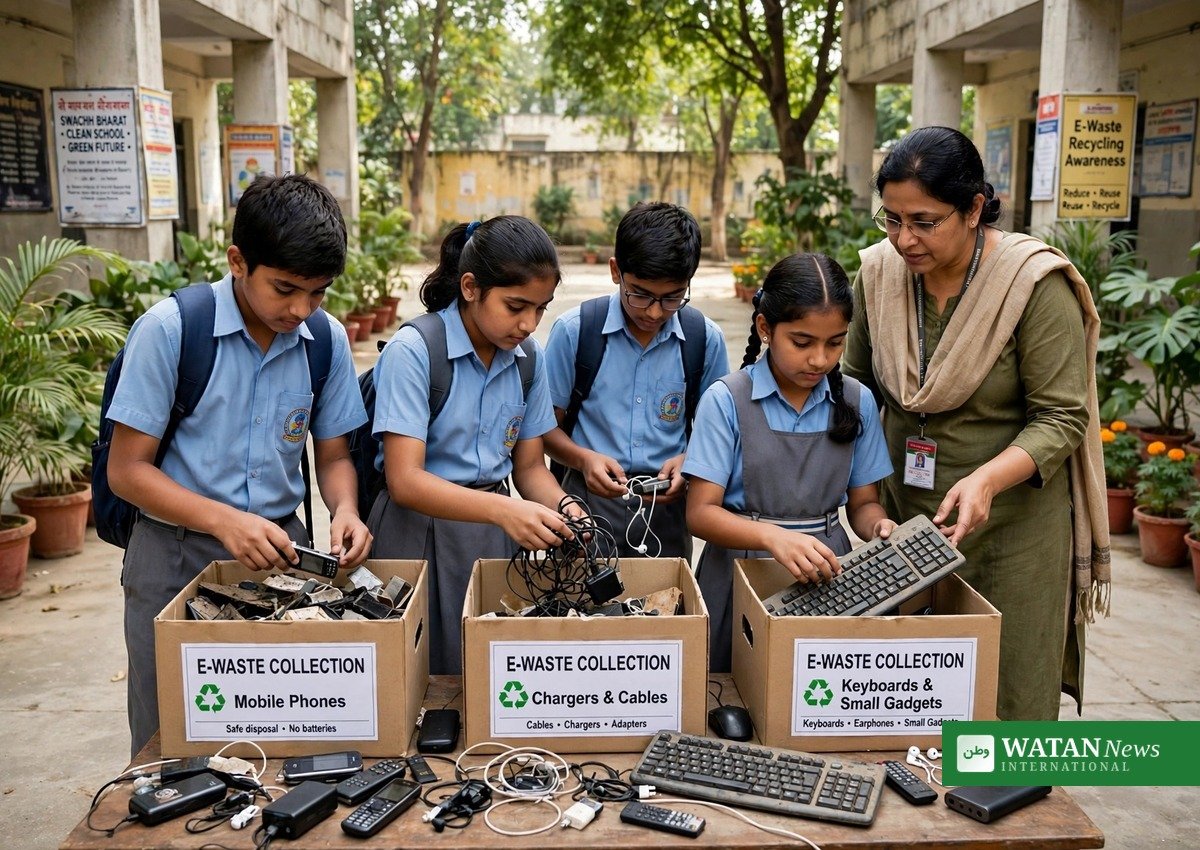
More than 57,000 schools across India have joined a nationwide e-waste awareness campaign, collecting 427,000 discarded electronic items and setting up nearly 40,000 dedicated collection corners. The E-Waste Awareness and Reduction Campaign, run under the Ministry of Education’s Eco Clubs for Mission LiFE initiative, shows how awareness, backed by practical guidance, can turn classrooms into collection points for responsible recycling.
A campaign that turned classrooms into collection points
The campaign is conducted by the Bajaj Foundation in collaboration with the Department of School Education and Literacy of the Ministry of Education, with support from UNICEF YuWaah. It forms part of Special Campaign 6, which runs from 2 to 31 October, and its nationwide school collection drive day falls on 28 October.
According to the campaign figures reported on 27 October, a total of 57,271 schools reported activities, engaging 3.3 million participants, including 3.02 million students and 278,000 teachers. Of these, 25,731 schools reported collecting e-waste, and 39,494 e-waste collection corners were established across the country.
Through 36 webinars held for states and union territories, the campaign gave guidance on identifying e-waste, safe collection and segregation, storage, handling, transportation, repair, reuse and responsible recycling. Outreach covered CBSE schools, Kendriya Vidyalayas and Jawahar Navodaya Vidyalayas, with regional-language sessions making the information accessible to school communities across the country.
Why e-waste matters
Discarded electronics contain valuable metals but also hazardous substances, which is why experts say they must not go into ordinary rubbish. The Global E-waste Monitor 2024 reported that 62 million tonnes of e-waste were generated worldwide in 2022, of which only 22.3 percent was formally collected and recycled.
The school sessions also addressed practical questions raised by teachers and Eco Club coordinators, including how to identify authorised recyclers, how to protect data stored on discarded devices, and how to keep records of collected material and its handover. Standard operating procedures, frequently asked questions, an e-book, awareness materials and authorised recycler information were developed and shared with educators.
Key facts
- 57,271 schools reported campaign activities across India.
- 3.3 million participants took part, including 3.02 million students and 278,000 teachers.
- 427,000 e-waste items were collected, as reported by 25,731 schools.
- 39,494 e-waste collection corners were set up in schools nationwide.
- The campaign runs until 31 October under Special Campaign 6.
Voices from the campaign
“Through Special Campaign 6 under Eco-Clubs for Mission LiFE, we are educating schoolchildren on reducing e-waste and disposing of it responsibly,” said Amarpreet Duggal, Joint Secretary in the Ministry of Education. To mark International E-Waste Day on 14 October, a mural made from discarded electronic material collected by students was installed at the Ministry of Education.
Giorgia Varisco, Chief of UNICEF YuWaah, said the partnership reflects a shared commitment to advancing youth-led environmental action, recognising young people as key agents of environmental change. Shohini Dutta, Chief Philanthropy Officer at Bajaj Foundation, said knowledge must go beyond documentation to enable meaningful action, and that communicating guidelines in regional languages is critical to bridging the last-mile gap.
The campaign’s next steps focus on continued school-led sustainability activities, collaboration with authorised recyclers and stronger documentation of collection and handover, so that responsible electronic waste management becomes part of everyday school life. Readers interested in the wider e-waste picture can also read Watan News’ earlier report on International E-Waste Day 2026 and the fast-tech challenge.
Frequently asked questions
What is e-waste?
E-waste is discarded electrical and electronic equipment, such as old mobile phones, chargers, keyboards, computers and other gadgets that are no longer wanted or working.
Why is e-waste harmful if thrown in ordinary rubbish?
Many electronic items contain hazardous substances alongside valuable metals. If they enter general waste, harmful materials can leak into soil and water, while recoverable metals are lost instead of being recycled.
What did Indian schools collect in this campaign?
Schools across India collected 427,000 e-waste items, as reported by 25,731 schools, and set up 39,494 collection corners to segregate and store discarded electronics.
What should households do with old electronics?
Households should hand old devices to authorised recyclers, wipe personal data from them first, and prefer repair or reuse where the item still works, rather than putting electronics in ordinary rubbish.
What is Mission LiFE?
Mission LiFE, short for Lifestyle for the Environment, is India’s initiative encouraging individuals to adopt environmentally friendly daily habits, including reducing waste, saving energy and reusing materials.
Author

usmanch0013@gmail.com
Related Posts
Indonesia Deploys Hundreds of Security Personnel as Students Prepare Jakarta Protests
- 0
- 487 words
Hundreds of security personnel were deployed across central Jakarta as University of Indonesia students prepared protests over the Sumatra and Borneo wildfires...
Read out all
Malaysia Seizes $12.1 Million Worth of AI Chips at Kuala Lumpur Airport
- 0
- 501 words
Malaysian customs said it seized advanced AI chips worth about 49.5 million ringgit ($12.11 million) at Kuala Lumpur International Airport, after finding...
Read out all
Lancet Countdown 2026: Varmedødsfald rammer rekordhøjt niveau, mens eksperter kræver global sundhedsnødsituation
- 0
- 806 words
Lancet Countdown-rapporten 2026 finder rekordhøje varmedødsfald og opfordrer til, at klimaforandringer anerkendes som en global sundhedsnødsituation.
Read out all
لانسٹ کاؤنٹ ڈاؤن 2026: گرمی سے اموات ریکارڈ سطح پر، عالمی صحت ایمرجنسی کا مطالبہ
لانسٹ کاؤنٹ ڈاؤن کی 2026 کی رپورٹ میں گرمی سے اموات ریکارڈ سطح پر پائی گئیں اور موسمیاتی تبدیلی کو عالمی صحت...
Read out all
Lancet Countdown 2026: Heat Deaths Hit Record High as Experts Urge Global Health Emergency
- 0
- 829 words
The 2026 Lancet Countdown report finds heat deaths at a record high and calls for climate change to be recognised as a...
Read out all
Trump Showcases Venezuelan Oil Tanker in Texas as Senate Race Tightens
- 0
- 489 words
Donald Trump campaigned in Texas beside a tanker carrying Venezuelan crude, one week before midterm elections, as he backed Ken Paxton in...
Read out all