- 0
- 1,073 word
Global infrastructure firm AECOM will oversee the delivery of one of the world’s largest renewable energy programmes after its appointment on 23 November 2026 as programme management consultant for three Adani Group infrastructure programmes in India, worth about $15 billion in combined capital investment — headlined by the 30-gigawatt Khavda renewable energy plant in Gujarat.
The appointment, announced by AECOM from Dallas, puts the US-listed infrastructure group at the centre of the delivery of the Khavda plant, which combines solar power, wind power and battery energy storage systems at a single site. AECOM describes the plant as one of the world’s largest renewable energy programmes.
The $15 billion figure is the combined capital investment of the three programmes themselves, not the value of AECOM’s services assignment. AECOM will provide programme management — governance, coordination and delivery oversight — across the portfolio.
What the $15 billion programme covers
The appointment covers three multi-year programmes:
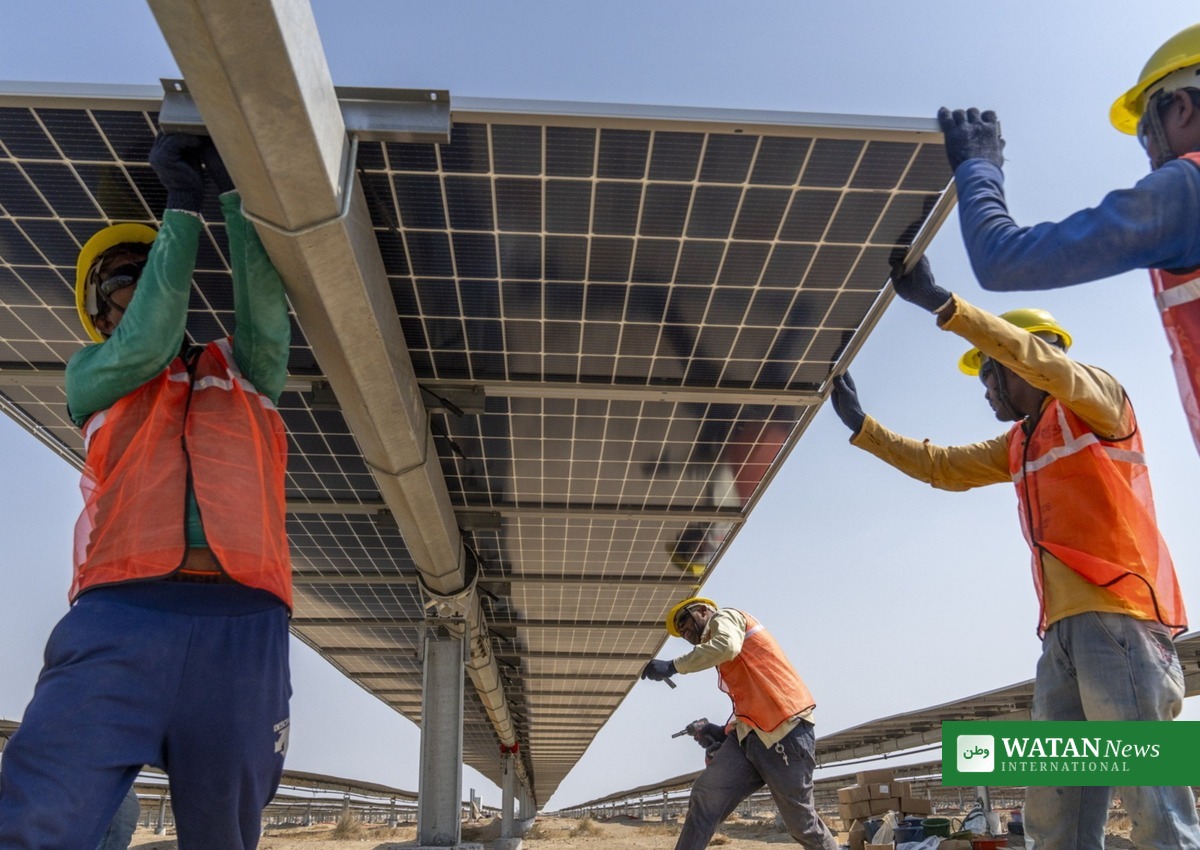
- The Khavda plant: AECOM will act as programme management consultant for the development of the 30-gigawatt Khavda Renewable Energy Plant in Gujarat, integrating solar, wind and battery storage at an unprecedented scale.
- Transmission: four transmission and substation projects across Gujarat and Maharashtra, strengthening the grid and building a green energy corridor that connects large renewable generation hubs with high-demand centres, including Mumbai.
- Aviation: programme-wide management, coordination and delivery oversight for the expansion of airports at Ahmedabad, Mangaluru and Thiruvananthapuram.
“AECOM brings deep global expertise in program management across the energy and aviation sectors, underpinned by a strong local presence in India,” said Richard Whitehead, chief executive of AECOM’s Europe and India region. “We look forward to supporting Adani Group in delivering these critical programs and accelerating India’s economic growth.”
Suvojoy Sengupta, chief executive of AECOM’s business in India, said clean energy and improved connectivity would be critical to achieving India’s Viksit Bharat vision — the government’s ambition to transform India into a leading global economy by 2047.
Khavda: a renewable energy park five times the size of Paris
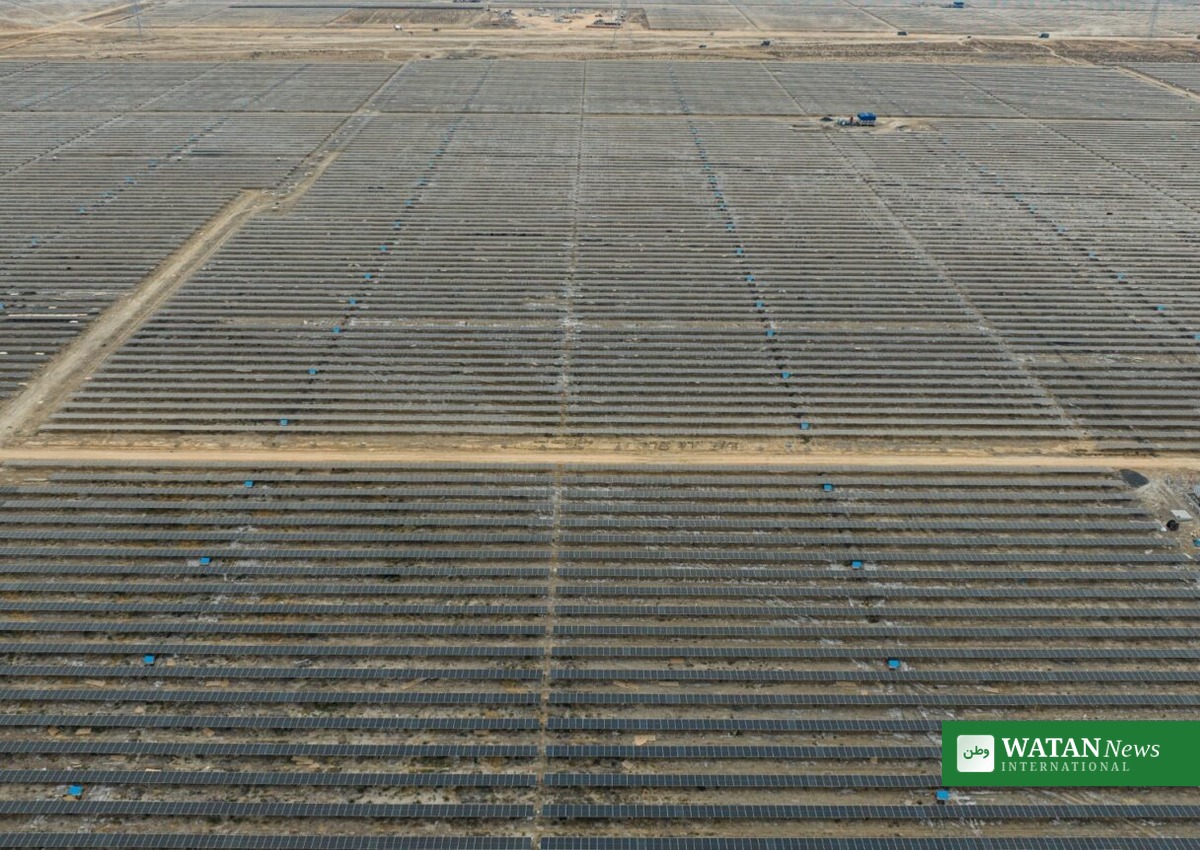
Khavda, in the Kutch district of Gujarat, is being developed by Adani Green Energy as a 30-gigawatt renewable energy park on 538 square kilometres of barren land — an area five times the size of Paris. The first gigawatt of capacity was switched on in March 2024, and by September 2026 about 10 gigawatts had been installed at the site, with the full 30 gigawatts planned by 2029.
The scale of the build-out is visible in Adani Green Energy’s own figures: in the 2025-26 financial year the company added 5,051 megawatts of renewable capacity — 3,409 megawatts of solar, 686 megawatts of wind and 956 megawatts of wind-solar hybrid — most of it at Khavda. Its total operational renewable generation capacity reached 20,280.80 megawatts in September 2026.
Why the grid connection matters
A plant of Khavda’s size is only useful if its power can reach homes and businesses. That is the role of the second programme: the four transmission and substation projects are designed to carry large volumes of renewable electricity from generation hubs in Gujarat to demand centres such as Mumbai, while making the grid more resilient as more wind and solar come online.
Battery storage is the other half of the answer. By pairing solar and wind with storage, the Khavda plant can supply power more steadily, including when the sun is not shining or the wind is not blowing. Adani’s round-the-clock renewable model — solar and wind combined with batteries to deliver steady day-and-night supply — was already in focus in November, when its subsidiary won a 1,750-megawatt round-the-clock renewable contract for West Bengal.
India’s clean-energy momentum
The appointment comes as India’s clean-energy build-out continues at record pace. India had 175 gigawatts of solar capacity at the end of October 2026, according to the Ministry of New and Renewable Energy, and is targeting 500 gigawatts of non-fossil capacity by 2030. In October 2026, solar supplied a record 12 per cent of India’s electricity generation.
The context is global as well as Indian. COP31 in Antalya ended on 22 November 2026 without an agreed final text, but a goal to raise electricity’s share of final energy use to 35 per cent by 2035 — the so-called 35-by-35 target — was backed by more than 70 countries, as reported in Watan News’ coverage of the COP31 aftermath. Delivering that kind of electrification depends on exactly the kind of large-scale generation, storage and grid projects now being managed at Khavda.
FAKTA
- AECOM was appointed on 23 November 2026 as programme management consultant for three Adani Group programmes worth about $15 billion in combined capital investment.
- The centrepiece is the 30-gigawatt Khavda Renewable Energy Plant in Gujarat, combining solar, wind and battery storage.
- Khavda covers 538 square kilometres — five times the size of Paris — with about 10 gigawatts installed by September 2026 and 30 gigawatts planned by 2029.
- The programme also includes four transmission and substation projects in Gujarat and Maharashtra, and airport expansion at Ahmedabad, Mangaluru and Thiruvananthapuram.
- India had 175 gigawatts of solar capacity at 31 October 2026 and targets 500 gigawatts of non-fossil capacity by 2030.
Frequently asked questions
What is the Khavda renewable energy plant?
It is a 30-gigawatt renewable energy park being developed by Adani Green Energy at Khavda in Kutch, Gujarat, combining solar power, wind power and battery energy storage. It covers 538 square kilometres, had about 10 gigawatts installed by September 2026, and is planned to reach 30 gigawatts by 2029.
What will AECOM actually do?
AECOM will act as programme management consultant — providing governance, coordination and delivery oversight across the three Adani programmes. It is not the owner or the builder of the plant; it manages how the programmes are delivered.
What does the $15 billion cover?
The figure is the combined capital investment of the three programmes — the Khavda plant, the transmission projects and the airport expansion — not the value of AECOM’s own services contract.
Why does the transmission part matter?
Large renewable plants need strong grids. The four transmission and substation projects create a green energy corridor carrying power from generation hubs in Gujarat to high-demand centres including Mumbai, and help the grid absorb growing volumes of wind and solar.
How does this fit India’s climate targets?
India had 175 gigawatts of solar capacity at 31 October 2026 and aims for 500 gigawatts of non-fossil capacity by 2030. Projects like Khavda — generation plus storage plus grid — are how that target is delivered in practice.
In short, the appointment turns one of the world’s biggest renewable energy sites into a managed, multi-year delivery programme. The test now is execution: building the remaining 20 gigawatts at Khavda, connecting it through the new transmission corridor, and keeping India’s record clean-energy pace going.
Author

usmanch0013@gmail.com
Related Posts

IGCC Climate Leaders’ Awards 2026 Honour Amanda McKenzie, Guneet Rana and Leilani Weier
- 0
- 807 words
Five climate leaders have been honoured at the IGCC Annual Climate Finance and Investment Summit, with Climate Council chief executive Amanda McKenzie...
Read out all
Venezuela to Repeal Simón Bolívar Law That Barred Opposition From Public Office
- 0
- 593 words
Venezuela's National Assembly will begin repealing the Simón Bolívar Law, which barred opposition figures from public office and carried prison terms of...
Read out all
Serbia’s Student Movement Delays Naming Prime Minister as Deadlines Near
- 0
- 469 words
A month after its landslide election win, Serbia's student-led movement has still not named a prime minister, with budget, refinery and gas...
Read out all
CITIS 2026: Klimainvesteringstopmøde i New Delhi skal gøre klimainnovation til investérbare projekter
- 0
- 1,054 word
New Delhi er vært for det fjerde CITIS-topmøde den 14.–16. december 2026, hvor investorer og innovatorer skal omsætte first-of-a-kind-klimateknologier til investerbare projekter...
Read out all
سی آئی ٹی آئی ایس 2026: نئی دہلی سربراہی اجلاس موسمیاتی جدت کو قابلِ سرمایہ کاری منصوبوں میں ڈھالے گا
نئی دہلی میں 14 سے 16 دسمبر 2026 تک چوتھا سی آئی ٹی آئی ایس سربراہی اجلاس ہوگا، جہاں سرمایہ کار اور...
Read out all
CITIS 2026: New Delhi Summit to Turn Climate Innovation into Bankable Projects
- 0
- 1,014 word
New Delhi hosts the fourth CITIS summit on 14–16 December 2026, where investors and innovators will work on turning first-of-a-kind climate technologies...
Read out all