- 0
- 2,376 words
London, 24 November 2026 — After a decade of planning, building and restoration, London Museum will open the doors of its new home on Saturday, 28 November 2026. The museum has moved into Smithfield’s historic General Market, a Victorian building that stood empty for more than 30 years, and the opening arrives as the museum marks its 50th anniversary.
The £437 million project turns a former meat market into the world’s largest city museum, with free permanent galleries telling 2,000 years of London’s story, from its earliest inhabitants to the voices shaping the capital today. More than 100,000 people, from schoolchildren and silversmiths to artists and writers, have helped shape the new museum.
“After a decade of imagining, planning, building, and creating, it is extraordinary to finally throw open the doors and welcome people into our new home in Smithfield,” said Sharon Ament, Director of London Museum. “This is the city’s story in all its grit and glitter.”
FAKTA
What: London Museum opens its new home in Smithfield’s General Market, London.
When: Saturday, 28 November 2026.
Cost: £437 million, developed with the City of London Corporation and the Mayor of London, with support from Bloomberg Philanthropies, the Goldsmiths’ Foundation, The Linbury Trust and The National Lottery Heritage Fund.
Admission: Free permanent galleries. Open 10am to 6pm, Sunday to Thursday, and 10am to 11pm on Fridays and Saturdays.
Collection: Seven million objects, the largest collection in the world relating to a single city, covering 400,000 years of history.
Visitors: Around two million people are expected every year.
Next phase: The neighbouring Poultry Market, with temporary exhibition spaces, a learning centre and a collections store, opens in 2028.
A market reborn
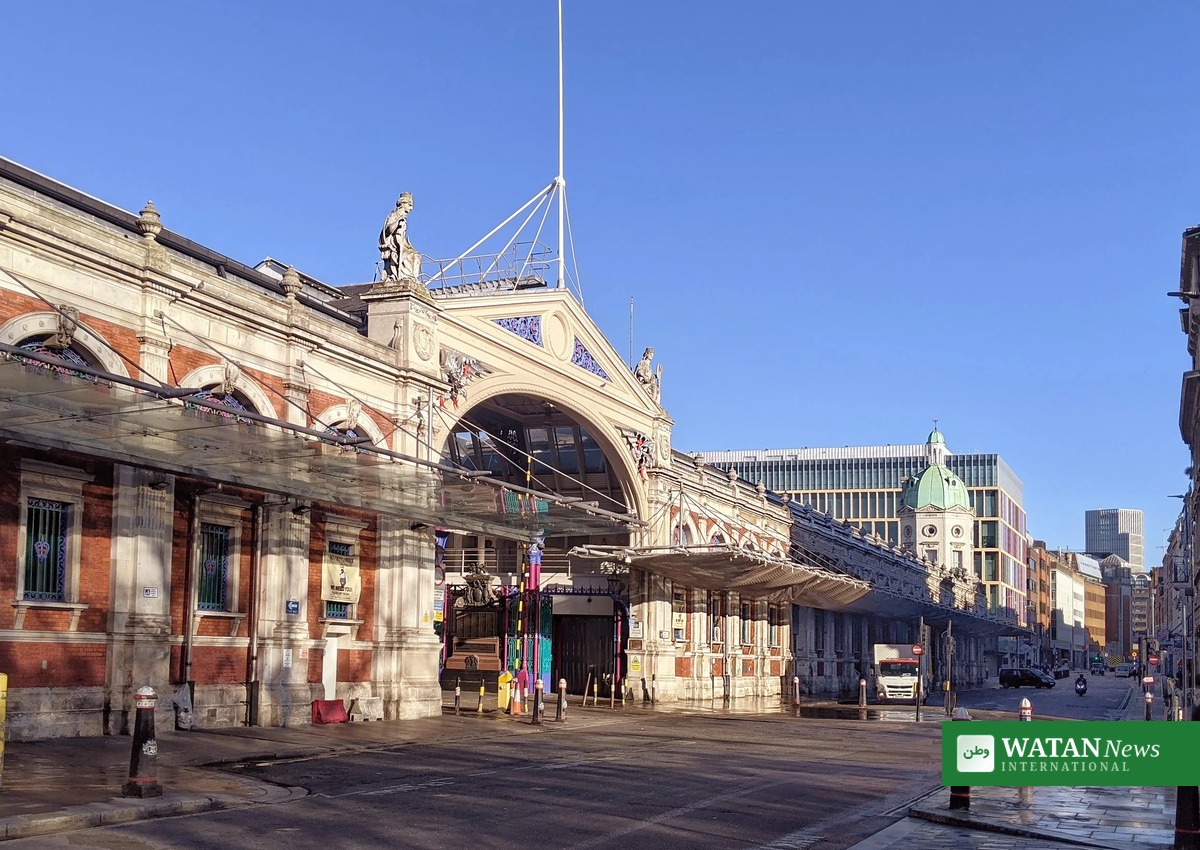
The General Market opened in 1883 and was designed by Sir Horace Jones, the architect behind Tower Bridge and Leadenhall Market. It saw more than a century of trade before it was shuttered in the 1990s and fell into disrepair. Its restoration has been led by Stanton Williams, collaborating architect Asif Khan Studio and conservation architects Julian Harrap Architects.
The museum was previously known as the Museum of London and was based in a building on London Wall, near the Barbican, until it closed in December 2022. The move to Smithfield returns the market building to public use for the first time in over three decades and places the museum in the oldest part of the capital, the City of London.
The project has drawn on expertise from more than 70 trades. Since 2023 it has given more than 40 apprentices a start in fields ranging from plumbing and electrical engineering to sustainable construction management. Heritage craftspeople, including the country’s last heritage coppersmiths, master stonemasons and Welsh blacksmiths, restored the building’s decorative ironwork, while original market signs, floating fireplaces and the wrought-iron Phoenix columns that hold up the enormous ceiling have been kept as playful nods to the building’s past.
The building is also designed to be one of the world’s greenest city museums. It is set to be among one per cent of buildings worldwide to achieve a BREEAM ‘Outstanding’ sustainability rating, supported by a loan from the Mayor of London’s Green Finance Fund, with solar panels and smart technology helping to run the site.
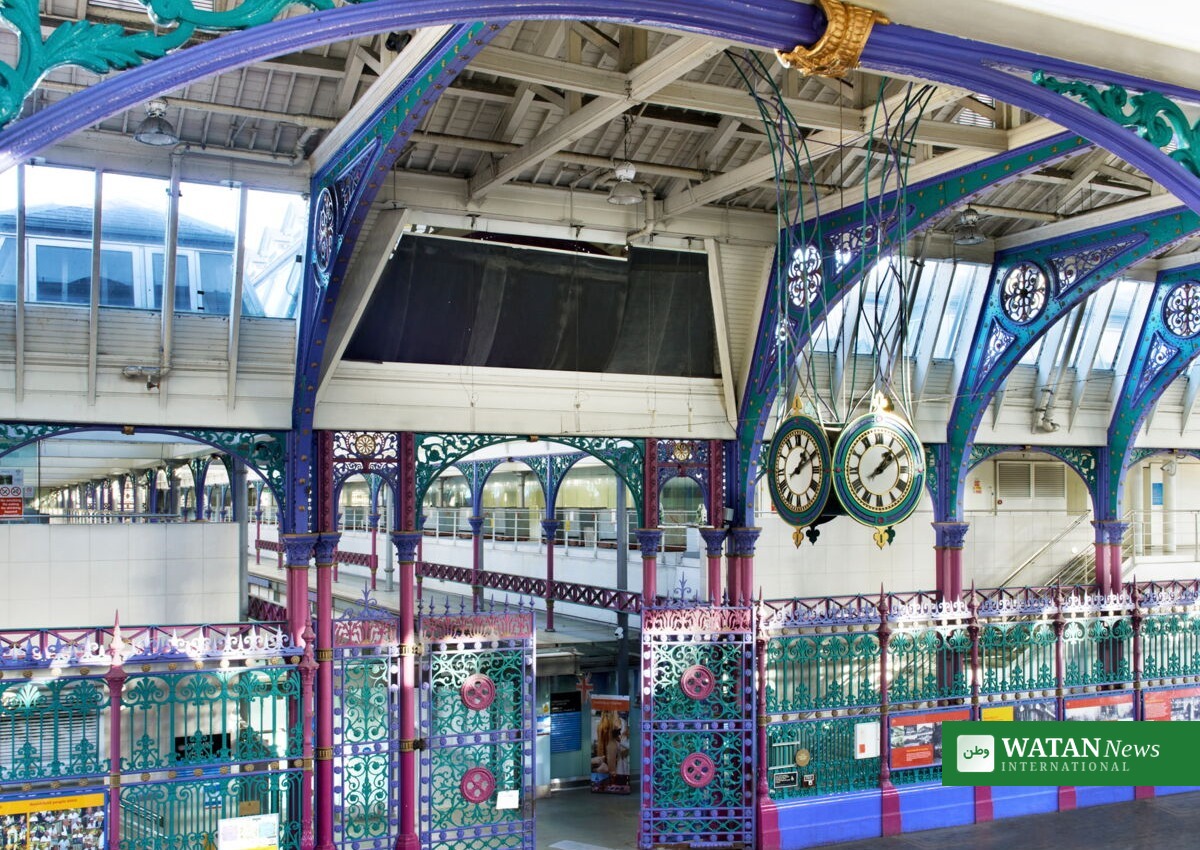
The restored interior of Smithfield’s General Market, with its colourful Victorian ironwork, now houses the London Museum Smithfield galleries.
Three galleries, three ways of seeing London
The new London Museum Smithfield unfolds across three main spaces — Real Time, Our Time and Past Time — each organised around time and each with its own emphasis, objects and atmosphere.
Real Time
The main entrance is a converted street, known as Real Time, which connects the museum to the capital of today. Animated screens reflect live data about London, from the city’s populations of pubs and bees to Londoners’ changing moods and weekly listening habits. Embedded into the floor, sherds of pottery and discarded Victorian clay pipes surface generations of everyday city life. Among the highlights are Banksy’s Piranhas sentry box, part of the artist’s 2024 animal series, and a clock tower featuring the final bell cast at the historic Whitechapel Bell Foundry, which will ring the museum open each day.
Our Time
At the heart of the museum, Our Time in the Linbury Hall is a social hub set across the bright former trading floor of the General Market. Around its perimeter, a restaurant, shop and show space for families and schools sit alongside 13 large anchor installations exploring the ways Londoners have come together.
The objects here speak to London in living memory. They include the magnificent 1757 Lord Mayor’s State Coach, which takes to the streets each year for the annual Lord Mayor’s Show; the Buckingham Palace switchboard, decommissioned in 1970 and on display for the first time; and the century-old East End icon Syd’s Coffee Stall, which will bring people together over free hot brews every Tuesday. A display called Hanging Out celebrates the places Londoners gather, with 20 striking signs including the fabric nightclub, the Galtymore Dance Club, Topshop and the original Morley’s Chicken Shop from Sydenham. The sounds of the city, from the rattle of buses to the ticking of Big Ben, run through the space in a soundscape crafted by electronic musician Scanner.
Past Time
Descending below ground, the cavernous permanent gallery Past Time sits at Roman street level. Visitors travel through 2,000 years of the city’s urban history, from prehistoric inhabitants who settled by the Thames to the modern global capital, with displays presented both chronologically and thematically for the first time.
Roman writing tablets from the Bloomberg Collection capture Londinium through the city’s earliest surviving voices, while a bone inscribed with runes reflects its time as Saxon Lundenwic. A vest reputedly worn by Charles I at his execution in 1649, a charred brick from the Great Fire and Bills of Mortality from the 1600s speak to plague, fire and political unrest. The journey ends in modern London, culminating at the London 2012 Olympic and Paralympic Games, with the London 2012 Olympic torch and an official portrait of west London gold-medal winner Sir Mo Farah.
One of the gallery’s most striking features is a six-metre viewing window offering visitors the chance to watch live trains rumble through the galleries as Thameslink trains travel between Farringdon and City Thameslink, on some of the world’s oldest underground lines.
Treasures, protest and pop culture
The displays range from the dazzling Cheapside Hoard, one of the most significant surviving collections of Elizabethan and Jacobean jewellery, to a chunk of the infamous Whitechapel Fatberg, a 250-metre-long mass of oil and wet wipes from the sewers. Significant pieces going on display for the first time include the Bowes Cup, thought to have been used by Elizabeth I at her 1559 Coronation banquet, and a 2,000-year-old Roman wall painting, excavated in 2007 and painstakingly conserved and reassembled over 400 hours.
Familiar favourites return too: Tom Daley’s London 2012 Olympic diving trunks, a dinner plate belonging to diarist Samuel Pepys and the glamorous art deco Selfridges lift. Music, fashion and the arts are represented by the smashed Fender Precision Bass guitar on loan from The Clash’s Paul Simonon, immortalised on the cover of the band’s 1979 album London Calling, a chair owned by Charles Dickens, and Anna Pavlova’s Dying Swan costume.
Woven throughout is London’s place as a centre of power, protest and activism. The museum’s collection of militant suffragette material, including Emmeline Pankhurst’s hunger strike medal, finds a home in Votes for Women, one of five focus galleries taking a deep dive into enduringly popular topics. Striking photographs by contemporary artist Ajamu X represent the lost likenesses of Black abolitionists, the Sons of Africa, alongside more modern objects including a statuette of Lady Phyll, co-founder of UK Black Pride, and placards from the disabled-led group Transport for All.
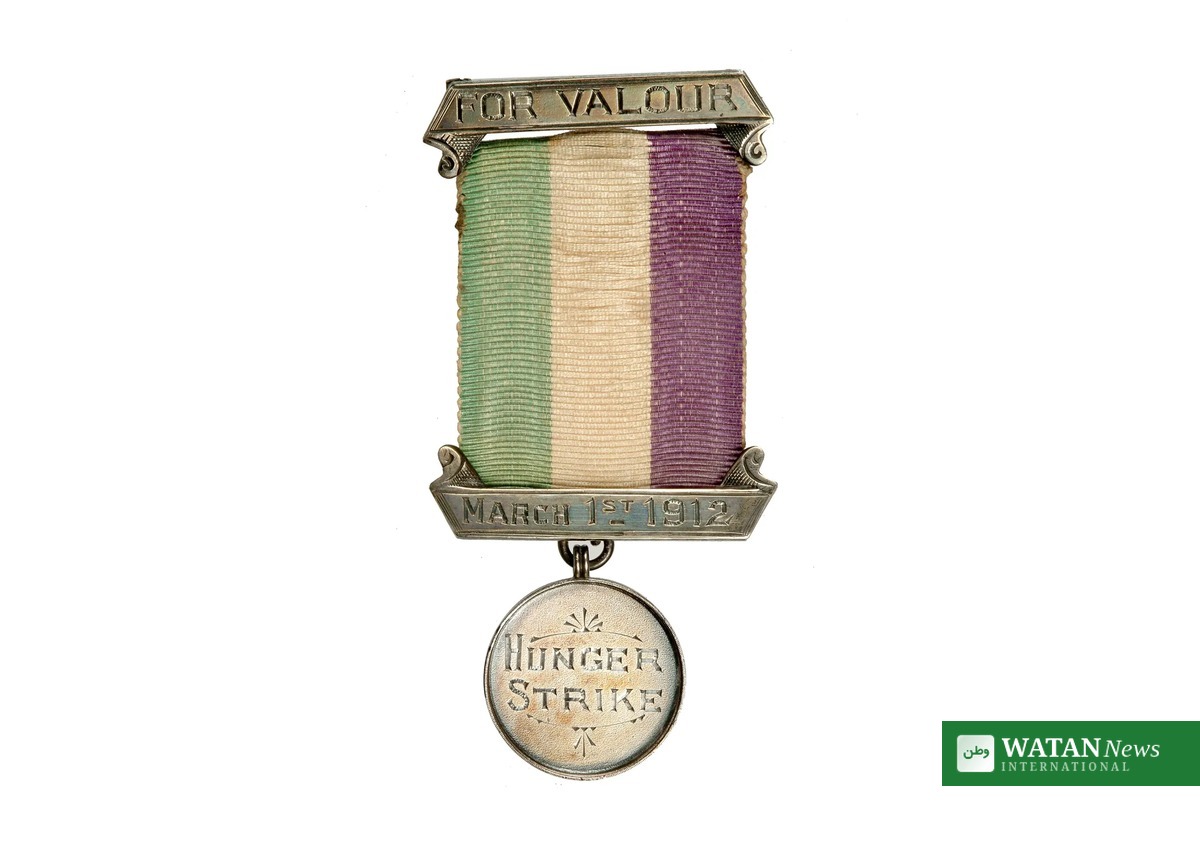
Emmeline Pankhurst’s hunger strike medal, inscribed “For Valour” and dated 1 March 1912, is among the objects in the London Museum Smithfield Votes for Women gallery.
Food, late nights and family days
The museum is designed to be a social destination as much as a gallery, with a day-to-night programme of events and rotating displays. Its inaugural season, London Tastes, runs from November 2026 to August 2027 and explores the changing appetites of a global food city. It is led by guest editors Ruby Tandoh and Jonathan Nunn, founder of Vittles, and sponsored by Sainsbury’s, whose first store opened in London 157 years ago. The programme will touch on Covent Garden market, Brick Lane, traditional pie and mash shops, chicken shop culture and the markets and makers behind London’s food scene.
Friday and Saturday late-night openings begin in December 2026, supported by Morley’s chicken shop and a resident DJ Collective of emerging talent from across London’s boroughs. Monthly House Parties with Reprezent 107.3 FM and a monthly Dinner Club with London’s best culinary talent both begin in February 2027.
Four cafe, restaurant and bar spaces have been created in partnership with Green & Fortune and food curator Robin Gill. They include Clerk’s House, an all-day restaurant inspired by London’s food heritage; Bartholomew’s, a bar with cocktails by Mr Lyan Studio; the Temperance Cocoa Rooms, an alcohol-free cafe with extended 24-hour opening from Thursday to Sunday; and The Roost, a rotating residency showcasing emerging culinary talent, opening in early 2027.
For families, storytelling will bring historical events to life in the new N. Sethia Showspace, and immersive theatre company Punchdrunk Enrichment will add weekly family performances from January 2027, with an adventure to discover one of London’s most elusive creatures.
The building, the money and the pigeon
The cost of the new museum has risen to £437 million in total, from a budget set at £337 million in 2019. The Greater London Authority, under Mayor Sadiq Khan, has given £95 million, while the City of London Corporation is contributing £222 million. Private foundations and sponsors, including Bloomberg Philanthropies, the Goldsmiths’ Foundation, the Linbury Trust and the National Lottery Heritage Fund, are also backing the project.
“The opening of this fantastic new museum is an extraordinary new chapter in our cultural story and reinforces London’s position as the culture capital of the world,” said the Mayor of London, Lord Sadiq Khan. Chris Hayward, Policy Chairman of the City of London Corporation, the museum’s largest principal funder, said the City Corporation was proud to give the story of London “the home it deserves, free for everyone, in the oldest part of the capital”.
The museum also caused a stir in 2024 when it unveiled a rebrand centred on the image of a pigeon. Ament has said the bird captures the city and its contrasts: beautiful, fun and a little scruffy. “I don’t think there’s a better representation of us than a pigeon,” she said.
| London Museum | Old home | New home |
|---|---|---|
| Location | London Wall, near the Barbican | Smithfield General Market, Farringdon |
| Building | Powell & Moya building | Victorian General Market, opened 1883 |
| Status | Closed December 2022 | Opens 28 November 2026 |
| Admission | Free | Free permanent galleries |
What happens next
The opening on 28 November is only the first phase. The adjacent Poultry Market, a 1960s building, will open in 2028 with two temporary exhibition spaces, a dedicated learning centre and an on-site interactive collection store. Once both phases are complete, the project will be the world’s largest city museum.
Before that, an 800-square-metre network of underground vaults, rediscovered during construction in 2019, will open to visitors for the first time in spring 2027 for Londinium: the making of a Roman city, a free exhibition drawing on never-before-seen objects from the Bloomberg Collection of Roman artefacts, using dynamic projection and spatial soundscapes to transport visitors back to the turbulent first 50 years of Roman London.
For now, the doors open on Saturday. Whether visitors come as Londoners discovering new stories from the city’s vast history or as first-time visitors starting their immersion in the capital, the museum’s ambition is clear: a free, living home for London’s story, in a market hall that spent a generation waiting to be used again.
Conclusion
London Museum’s move to Smithfield is more than a change of address. It rescues a landmark Victorian market, gathers seven million objects into three galleries shaped by more than 100,000 Londoners, and pairs 2,000 years of history with food, music and late-night openings. On 28 November 2026, one of London’s most familiar buildings begins its second life, and the city’s story gets a new home that is free for everyone.
Related Articles
London Museum Opens Its New £437m Home in Smithfield’s Historic General Market
Booker Prize 2026 Awarded to M. John Harrison
New York City Bans Horse-Drawn Carriages
Delhi Named World’s Most Polluted Major City on Diwali Eve
Frequently Asked Questions
When does London Museum open in Smithfield?
London Museum opens its new home in Smithfield’s General Market to the public on Saturday, 28 November 2026.
How much does it cost to visit London Museum Smithfield?
The permanent galleries are free. The museum is open from 10am to 6pm, Sunday to Thursday, and from 10am to 11pm on Fridays and Saturdays.
Where is the new London Museum?
The museum is in the historic General Market at Smithfield, in the City of London, near Farringdon. The Victorian market building opened in 1883 and had been out of public use for more than 30 years.
What is inside the new London Museum Smithfield?
Three main spaces — Real Time, Our Time and Past Time — hold highlights including the Cheapside Hoard, Emmeline Pankhurst’s hunger strike medal, the Lord Mayor’s State Coach, Banksy’s Piranhas sentry box, Roman writing tablets and a chunk of the Whitechapel Fatberg.
How much did the London Museum Smithfield project cost?
The project cost £437 million in total, up from a budget of £337 million set in 2019. The City of London Corporation contributed £222 million and the Greater London Authority gave £95 million, with further support from philanthropic partners.
What was the museum called before?
It was previously called the Museum of London and was based in a building on London Wall, near the Barbican, until it closed in December 2022.
When does the second phase of London Museum Smithfield open?
The neighbouring Poultry Market, with two temporary exhibition spaces, a dedicated learning centre and a collections store, is due to open in 2028. A free exhibition in the rediscovered underground vaults, Londinium: the making of a Roman city, opens in spring 2027.
Author

usmanch0013@gmail.com
Related Posts
New Zealand Election Deadlock Leaves Centrist Newcomer as Kingmaker
- 0
- 785 words
New Zealand's final election count has left neither the right-wing incumbents nor the left-wing opposition with a parliamentary majority, handing the centrist...
Read out all
WWF and Amano So Name 24 Young Leaders for 2027 Fellowship Across Africa
- 0
- 1,331 word
WWF and Amano So have named 24 young leaders from 10 African countries for the 2027 WWF-Amano Fellowship, a nine-month programme of...
Read out all
Heathrow Offers Airlines £81 Million for Greener Fuel in 2027 as Sign-Up Deadline Hits Today
- 0
- 930 words
Airlines have until 5pm UK time today, 27 November 2026, to sign up for Heathrow's £81.24 million sustainable aviation fuel incentive for...
Read out all
QTS Plants 50 Trees in Irving to Kick Off 5,000-Tree Drive Across North Texas
- 0
- 752 words
QTS Data Centers, the Texas Trees Foundation and the City of Irving have planted 50 trees at Lanotte-Spurlock Park, kicking off a...
Read out all
Pablo Hernández de Cos Picked as Next ECB President, Succeeding Lagarde in February
- 0
- 621 words
Leaders of the eurozone countries have chosen Spain's Pablo Hernández de Cos as the next ECB president. He succeeds Christine Lagarde in...
Read out all
COP31 forest fund reaches $8.3 billion — but $1.7 billion short of its launch target
- 0
- 1,273 word
The Tropical Forest Forever Facility raised $8.3 billion at COP31, but with $1.7 billion still to find before 31 December, Norway's $3...
Read out all