- 0
- 734 words
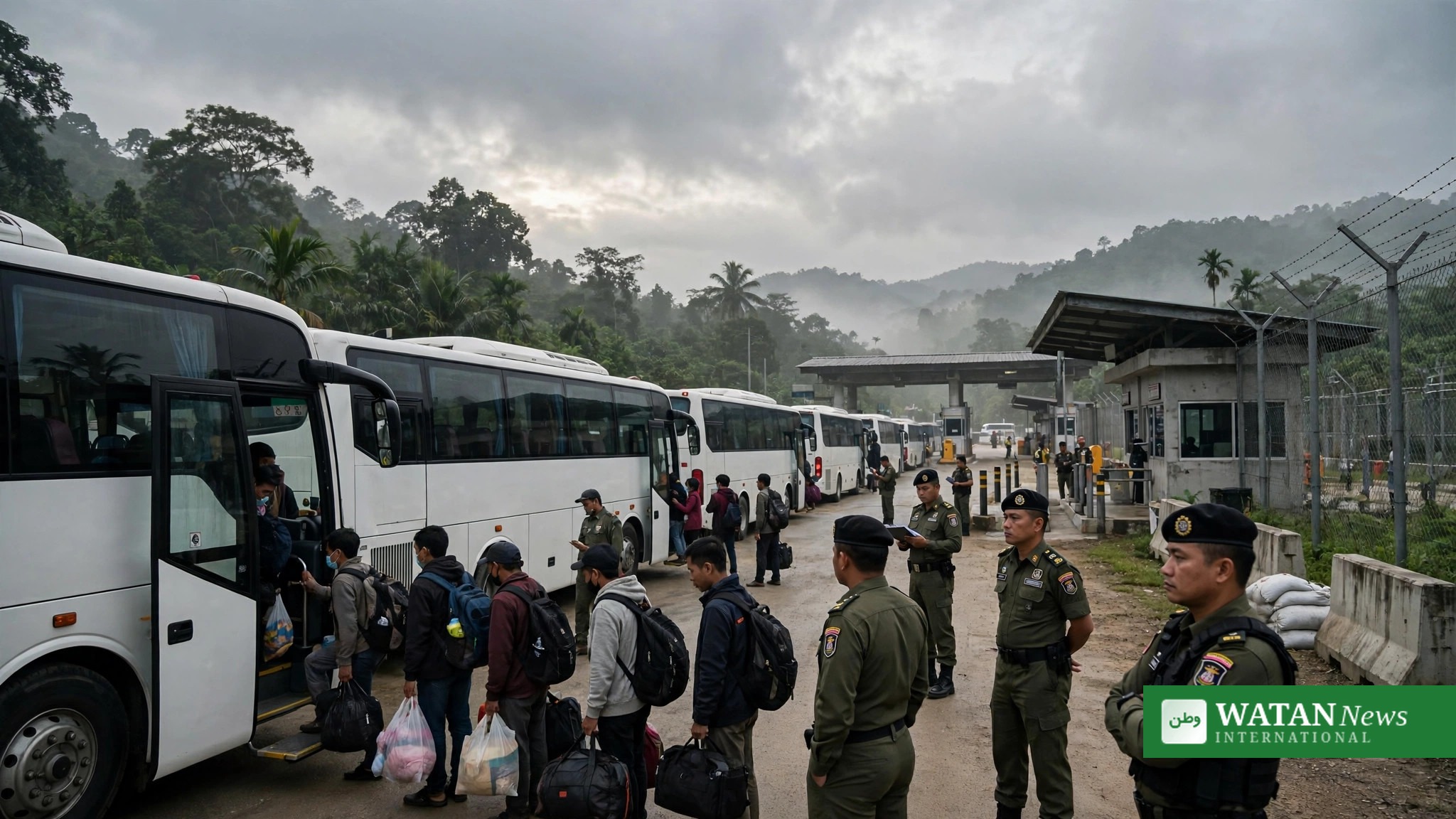
Malaysia has commenced the repatriation of approximately 1,500 Myanmar nationals, a move that has drawn sharp criticism from the United Nations and human rights organizations. These repatriations are part of a larger plan to send back 5,000 individuals from detention centers, despite significant concerns for their safety in their war-torn homeland.
- Malaysia began repatriating about 1,500 Myanmar nationals on Tuesday.
- The scheme aims to send back a total of 5,000 individuals from detention centers.
- UN and advocacy groups have voiced concerns about the safety of those returned to Myanmar.
- Myanmar has been embroiled in a civil war since 2021, with ongoing persecution concerns.
Repatriation Process Underway
The Malaysian government confirmed that the repatriations were in progress on Tuesday. This initiative is framed as a measure to address the “legacy issue” of foreign asylum-seekers, predominantly from Myanmar, which the government states imposes a significant financial burden and creates social and security threats.
- Myanmar nationals were processed at the Lumut naval base.
- Dozens of buses, under police escort, transported individuals to the Majlis Perbandaran Manjung stadium.
- Three Myanmar navy ships were observed departing from the naval base, utilized in previous repatriation efforts.
Concerns for Safety and Persecution
Advocacy organizations and the UN have expressed grave concerns that the repatriated individuals may face a dangerous homecoming. The situation in Myanmar remains volatile due to an ongoing civil war that erupted in 2021.
- The Rohingya, a Muslim minority, constitute two-thirds of Myanmar refugees in Malaysia.
- Many Rohingya fled to Malaysia in 2017 following a brutal military crackdown.
- There are worries that the Rohingya may be returned to a country where they face persecution amounting to genocide.
International Objections to Repatriation
The UN High Commissioner for Human Rights, Volker Turk, has urged Malaysia to halt the repatriation process immediately. He emphasized that no one should be forcibly deported to Myanmar given the severe human rights violations and the risk of renewed violence.
UN Human Rights Chief’s Statement
Volker Turk stated that the current conditions in Myanmar are far from safe for returnees. He highlighted the egregious human rights abuses and the real risk of facing similar violence upon their return.
- The UN chief stressed that the situation on the ground in Myanmar is dire.
- He warned of the potential for continued violence and persecution against returnees.
- The call to stop deportations underscores international concern for the well-being of refugees.
Malaysia’s Rationale for Repatriation
Malaysia’s interior ministry stated that the repatriation is part of a plan to resolve the issue of foreign asylum-seekers, with 95% of them being from Myanmar. The government views this as a necessary step to alleviate national burdens.
- The presence of asylum-seekers is described as a significant financial burden.
- Social crises and security threats are also cited as reasons for the repatriation policy.
- The government aims to address what it calls a “legacy issue” of foreign nationals.
The Plight of the Rohingya
The Rohingya Muslim minority group represents a substantial portion of Myanmar’s refugee population in Malaysia. Many sought refuge after fleeing violence and persecution in their home country.
- Two-thirds of Myanmar refugees in Malaysia are Rohingya, according to UN figures.
- The Rohingya escaped to Malaysia following a severe military crackdown in 2017.
- Their return to Myanmar raises fears of continued persecution and potential genocide.
Conclusion
Malaysia’s decision to proceed with the repatriation of Myanmar nationals, including many Rohingya, has ignited international outcry. Despite warnings from the UN and human rights groups about the severe risks involved, Kuala Lumpur maintains that the move is necessary to address national burdens.
The fate of these individuals upon their return to a country plagued by civil war and human rights abuses remains a critical concern for the global community.
Frequently Asked Questions
What is Malaysia’s plan regarding Myanmar nationals?
Malaysia plans to repatriate approximately 5,000 Myanmar nationals from detention centers, with about 1,500 sent back initially.
Why are human rights groups concerned?
They fear returnees will face persecution and violence in Myanmar due to the ongoing civil war and human rights abuses.
Who are the Rohingya?
The Rohingya are a Muslim minority group from Myanmar, many of whom fled persecution and violence in 2017.
What is Malaysia’s stated reason for repatriation?
Malaysia cites financial burdens, social crises, and security threats posed by the presence of asylum-seekers.
What has the UN said about the repatriations?
The UN High Commissioner for Human Rights urged Malaysia to stop, stating no one should be forcibly returned to Myanmar.
Author

usmanjaved13132@gmail.com
Related Posts
Estonia Closes Russia Border: All Crossings to Shut From December 1 After Foiled Arson Attack
- 0
- 550 words
Estonia will close all three of its land border crossings with Russia from December 1 after authorities said they foiled a suspected...
Read out all
48 Hours Without Sleep: The Journalists Bringing COP31 to the World
- 0
- 1,351 word
The Guardian's reporters describe 48-hour shifts, three-hour bus rides and the fight to make COP31's jargon make sense — as 3,645 journalists...
Read out all
COP31 Comes Home: What the Antalya Climate Talks Mean for Everyday Sustainable Living
- 0
- 1,179 word
Sunday is 'A Breath in Antalya' — COP31's culture day. The food on the table, the energy in the house and the...
Read out all
Ukraine Strikes Major Russian Petrochemical Plant in Deep Drone Attack on Tatarstan
- 0
- 751 words
Ukrainian drones struck the Nizhnekamskneftekhim petrochemical complex and the TAIF-NK oil refinery in Nizhnekamsk, Tatarstan, overnight into Sunday, Kyiv's General Staff said,...
Read out all
COP31: UK, Canada and Norway Launch $10 Billion ’10by30′ Climate Finance Push for Clean Energy
- 0
- 1,204 word
Three development finance institutions launched '10by30' at COP31 in Antalya on 13 November, aiming to mobilise at least $10 billion for renewable...
Read out all
Wales Stun All Blacks 35-28 to End 73-Year Wait for Victory
- 0
- 582 words
Wales ended 73 years of hurt against New Zealand with a stunning 35-28 Nations Championship win at the Principality Stadium in Cardiff,...
Read out all