- 0
- 1,036 word
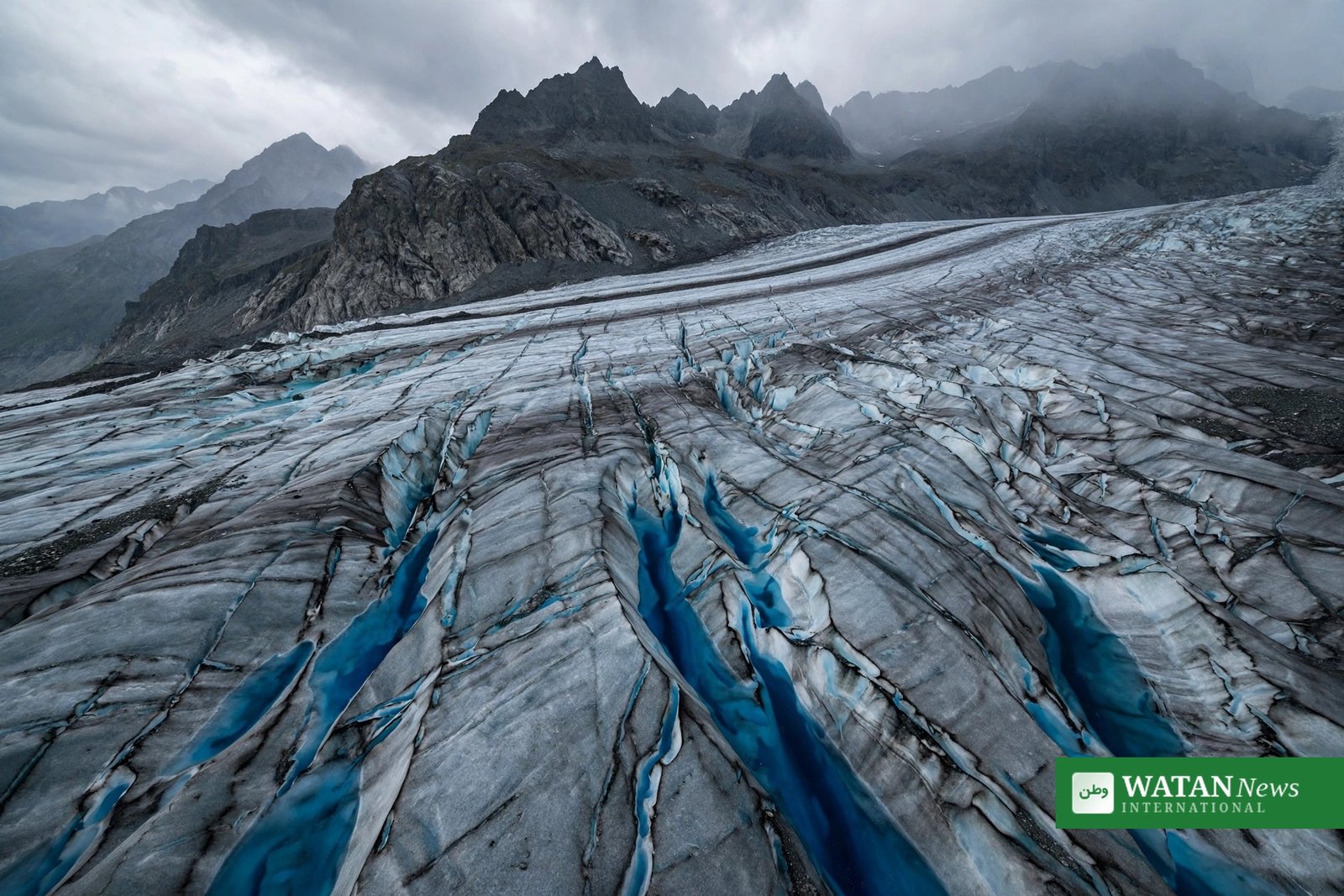
Switzerland’s glaciers have suffered one of their worst years on record. New figures released on 30 September 2026 show the Swiss glaciers ice loss 2026 reached 5.5% of remaining ice — a “disastrous” toll after Europe’s record-breaking heatwave, according to the Swiss Glacier Monitoring Network (GLAMOS). Scientists warn that the accelerating retreat of the Alps’ ice threatens long-term water supplies across Europe, even as the surge of meltwater briefly eased this summer’s drought.
FAKTA: The 2026 glacier report
- Finding: Swiss glaciers lost more than 5% — precisely 5.5% — of their remaining ice in 2026, one of the worst annual losses ever recorded.
- Source: The Swiss Glacier Monitoring Network (GLAMOS) and the Swiss Commission for Cryosphere Observation of the Swiss Academy of Sciences, reporting on 30 September 2026.
- Five-year toll: Almost a fifth of Switzerland’s glacier ice has disappeared in the last five years alone.
- Hardest hit: The Aletsch Glacier, Switzerland’s largest, suffered its biggest-ever melt; the Glacier de Tsanfleuron lost more than four metres of average thickness.
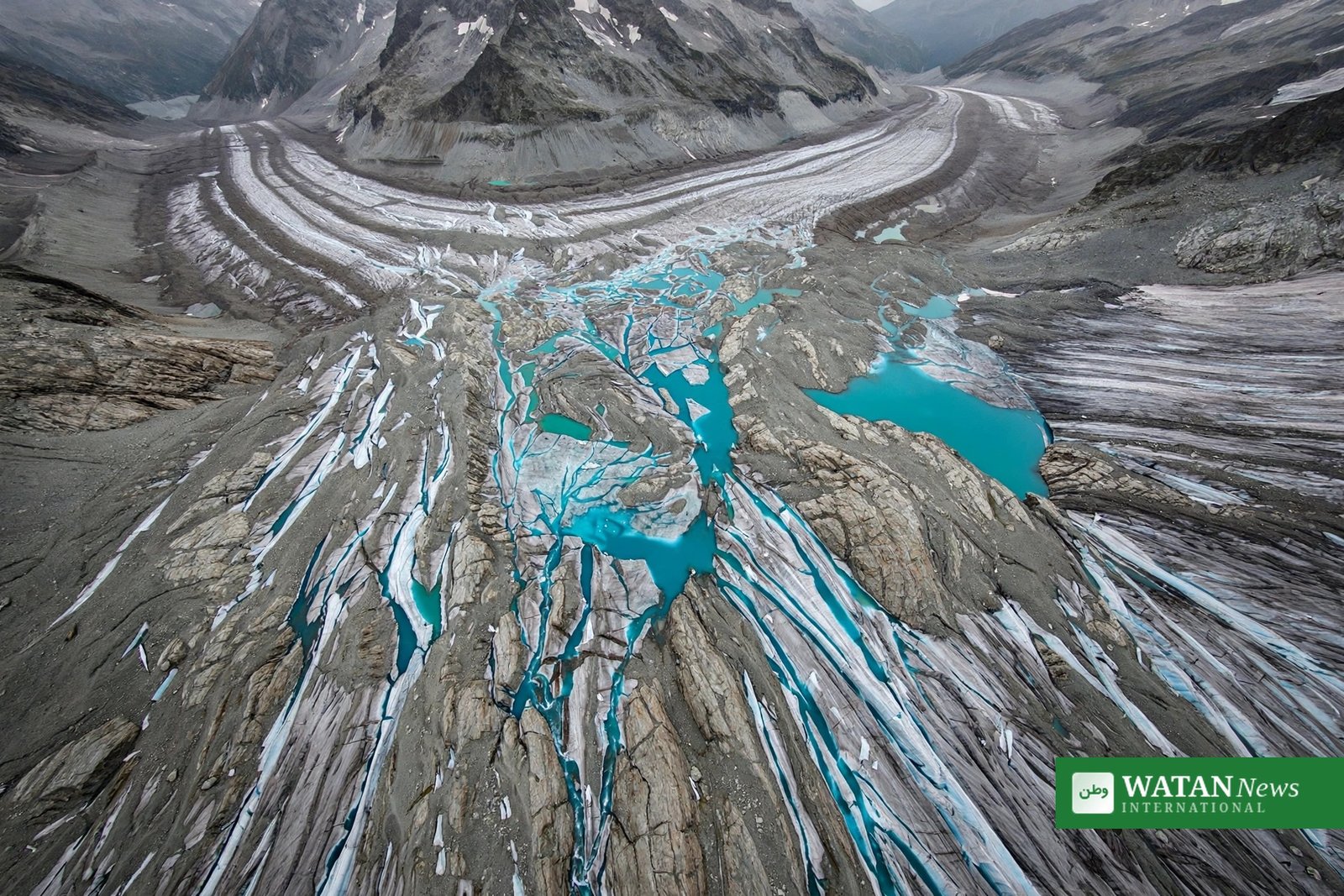
- Water released: Around 2.2 trillion litres flowed out between July and September — more than four times the annual drinking water consumption of Swiss households.
- Why it happened: A winter with too little snow followed by record summer heat, which GLAMOS director Matthias Huss called “enormous” melting.
Why 2026 was so devastating
The Alps entered the summer of 2026 already vulnerable. A mild winter had left far less snow than usual on the glaciers, stripping away the reflective white layer that normally shields the ice. Early and intense heatwaves then melted the remaining snow quickly, exposing dark glacier ice that absorbs far more solar energy — and each subsequent heatwave cut deeper into the bare ice.
The result was the second-worst annual loss ever measured. Only 2022 was worse, when 6% of Swiss glacier ice vanished — that year’s melt was amplified by dust clouds from North Africa darkening the snow. The slightly larger winter snowpack this year kept 2026 just below the record, but Matthias Huss’ verdict was blunt: “We are seeing extreme years almost every year now and this is really a worrying situation.”
The 2026 report in numbers
| Measure | Figure |
|---|---|
| Ice lost in 2026 | 5.5% of remaining Swiss glacier ice |
| Previous record (2022) | 6% — amplified by Saharan dust on the snow |
| Ice lost over the past five years | Almost a fifth (around 20%) |
| Aletsch Glacier (Switzerland’s largest) | Biggest-ever annual melt |
| Glacier de Tsanfleuron | Lost more than 4 metres of average thickness |
| Water released July–September | ~2.2 trillion litres — over 4× the annual drinking water use of Swiss households |
Why Swiss glacier ice loss threatens Europe’s water supply
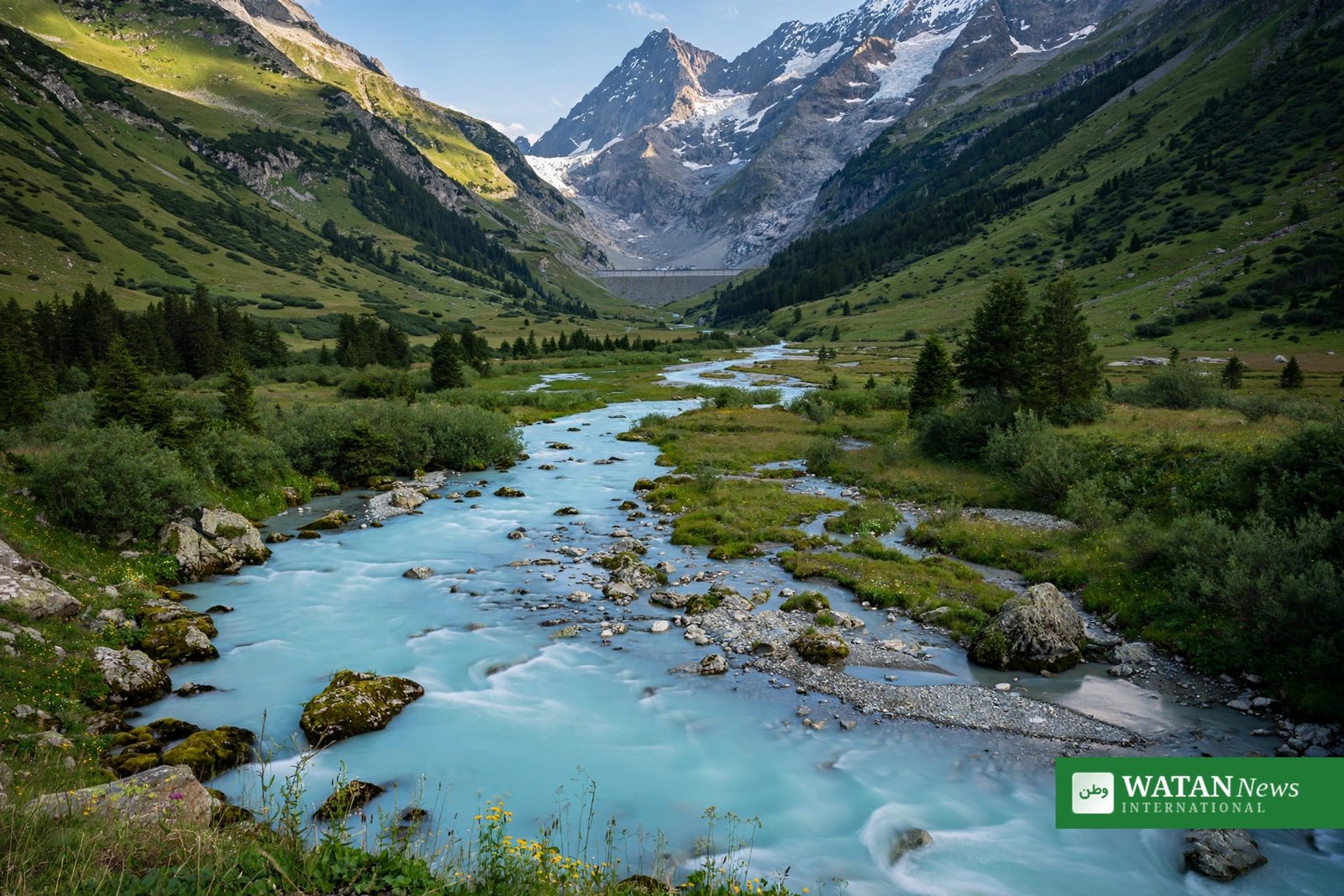
Glaciers are Europe’s water towers. They store winter snow and release it slowly through spring and summer, feeding the continent’s great rivers — including the Rhine and the Danube — long after the rains stop. That meltwater irrigates farms, cools power plants, and sustains hydropower production across several countries.
The flood of meltwater in 2026 had one upside: it eased summer water shortages when Europe needed it most. But scientists stress this is water being spent, not renewed. As Huss put it, “Now we are in this new world, in this future, where glaciers are just melting away.” Once the ice is gone, the slow, reliable release that farmers and energy producers depend on in dry years disappears with it — raising the prospect of future shortages for agriculture and hydropower alike.
A warning from two mountain ranges
Retreating ice is not only a water story. Thawing permafrost and thinning glaciers are destabilising mountain slopes, raising the risk of landslides, rockfalls and devastating floods. The Alps saw a stark demonstration in May 2025, when part of the Birch Glacier collapsed and buried the village of Blatten. And in August 2026, a far deadlier event struck the Himalayas: around two square kilometres of rock and glacier ice collapsed from Langtang Lirung on the Nepal–Tibet border, killing more than 1,400 people and leaving thousands missing.
A World Weather Attribution study released in September concluded that human-caused warming almost certainly helped set the stage for that disaster, thinning glaciers and melting permafrost deep in the bedrock. “This disaster was not an extreme weather event, but the fingerprints of climate change are still clear to see in long-term changes,” said Imperial College researcher Ben Clarke. Reporting by Reuters and NPR on the Swiss figures makes the same point closer to home: extreme melt years are becoming routine, not exceptions.
Conclusion
The 2026 figures are a milestone in a long decline: Swiss glaciers are losing ice faster than ever, and “disastrous” years are arriving almost annually. The immediate comfort — rivers kept flowing through a scorching summer — masks a harsher arithmetic: Europe is drawing down its frozen water reserves at a pace they cannot be replenished. Without sharp cuts in greenhouse gas emissions, the water towers of the Alps will keep melting away, and the costs will land on farms, power grids and mountain communities. Watan News will keep following the story — read this story on watannews.dk.
Frequently asked questions
What did the 2026 glacier report find?
Switzerland’s glaciers lost 5.5% of their remaining ice in 2026 — one of the worst annual losses ever measured, according to GLAMOS and the Swiss Commission for Cryosphere Observation.
Why was 2026 such a bad year for Swiss glaciers?
A low-snow winter left the ice unprotected, and record summer heatwaves then melted the snow cover early, exposing dark ice that absorbs more heat and melts faster.
How does glacier melt threaten water supplies?
Glaciers act as Europe’s water towers, releasing stored snow slowly into rivers like the Rhine and Danube. Rapid melting drains these reserves, jeopardising water for agriculture and hydropower in dry years to come.
Was 2026 worse than the 2022 record?
No — 2022 still holds the record at 6%, helped by Saharan dust darkening the snow. But 2026 is the second-worst, and Switzerland’s largest glacier, the Aletsch, suffered its biggest-ever melt this year.
Can melting glaciers cause disasters?
Yes. Thawing permafrost and thinning ice destabilise slopes. In August 2026 a rock-and-ice collapse on Langtang Lirung in the Himalayas killed more than 1,400 people; scientists found climate change had made such an event more likely.
Author

usmanjaved13132@gmail.com
Related Posts
Putin Warns West: Russia Ready to Use All Weapons for Kaliningrad
- 0
- 683 words
Russian President Vladimir Putin has issued a stark warning to the West, stating that Russia is prepared to deploy all available weaponry...
Read out all
Renee Good’s family sues Trump officials after ICE agent killing
- 0
- 1,329 word
Renee Good's family filed two federal lawsuits Thursday over the ICE agent's fatal shooting of the 37-year-old mother of three in Minneapolis,...
Read out all
Rawalpindi Police arrest 5 suspects, recover 6 stolen motorcycles
- 0
- 527 words
Rawalpindi Police arrested five suspects from three gangs and recovered six stolen motorcycles, cash and weapons in a targeted crackdown across the...
Read out all
New crew launches to space station aboard SpaceX’s Crew Dragon from Florida
- 0
- 1,117 word
NASA's SpaceX Crew-13 mission launched four astronauts to the International Space Station on October 1, 2026, on a record-fast 7-hour-50-minute flight. Meet...
Read out all
The UN counts plastic bottles by the minute, not the year
- 0
- 1,238 word
UNEP says an estimated 1 million plastic bottles are bought every minute. It gives no yearly total, no daily total and no...
Read out all
Denmark vs Portugal LIVE: UEFA Nations League clash unfolds
- 0
- 835 words
Denmark host Portugal at Parken Stadium tonight in the UEFA Nations League — kickoff 20:45 local time. Preview, head-to-head and live updates.
Read out all