
- 0
- 1,122 word
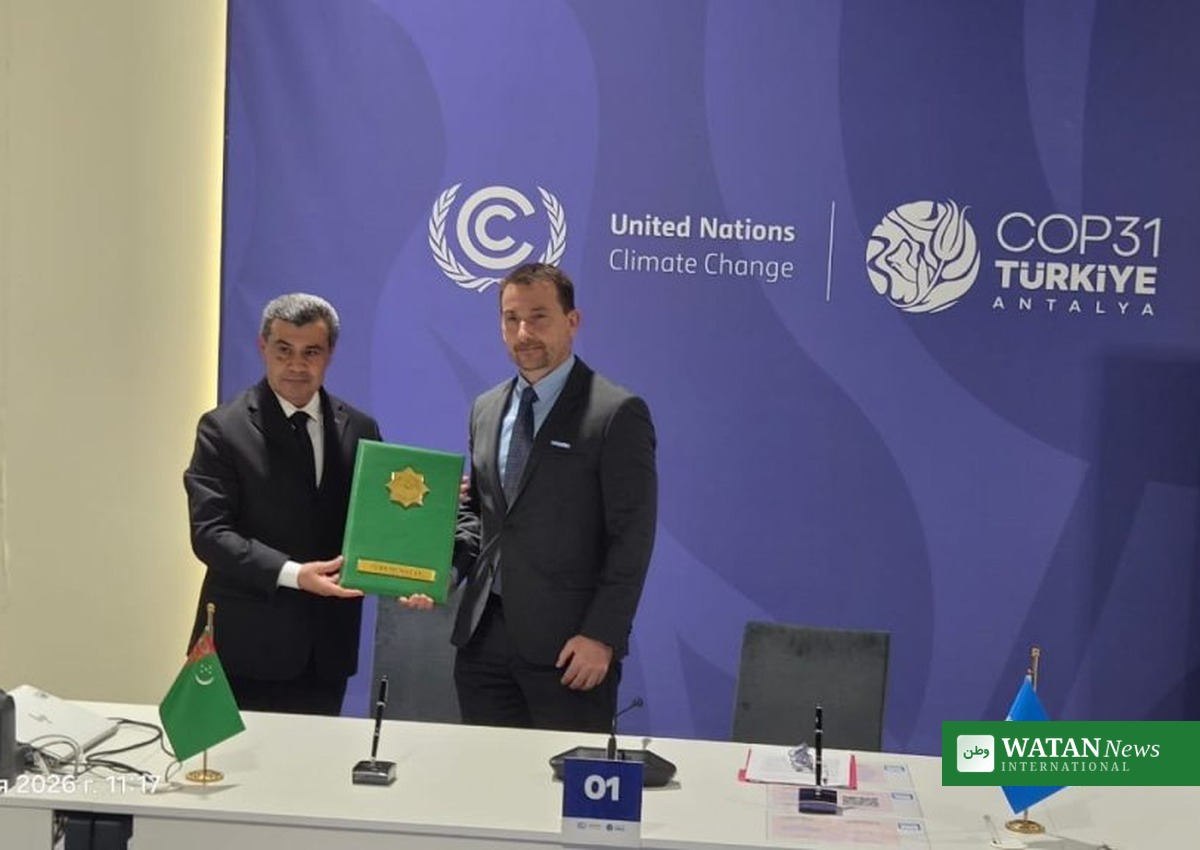
Antalya, 12 November 2026 — Turkmenistan has signed the Declaration on Children, Youth and Climate Action at COP31, completing a united Central Asian backing for the pledge to put children at the centre of climate policy. The signature was made on 11 November by the country’s Minister of Education, Jumamyrat Gurbangeldiyev, together with Gernot Laganda, UNICEF’s Global Practice Director for Climate and Environment and head of the UNICEF delegation to COP31.
Turkmenistan joins more than 80 countries that have endorsed the Declaration — and it is the fifth and final Central Asian country to do so, meaning the whole region now stands behind it.
What the Declaration promises
The Declaration was launched at COP25 in 2019 and is built on priorities set by young people themselves. It calls on governments to include children in national climate and adaptation plans, to invest in adaptation and disaster risk reduction that protects the most vulnerable children, to bring climate education to every child, and to give young people a meaningful voice in climate decisions.
“Children are hit hardest by the climate crisis, yet they are too often left out of the decisions that shape their future,” said Laganda at the signing. “With Turkmenistan, all five Central Asian countries now stand behind this Declaration: one region, one voice for its children. A signature is not the end of a sentence. It is the first line of a new chapter, and children will write it.”
A region speaking with one voice
The five Central Asian countries are jointly implementing a Regional Green School Platform, endorsed at the Regional Ecological Summit in Astana in April 2026, to make schools across the region greener, safer and more resilient to climate change.
For Turkmenistan, the signature builds on work already under way in its schools. “This step once again confirms Turkmenistan’s steadfast commitment to protecting the interests of the younger generation and creating the conditions for its harmonious development,” said Minister Gurbangeldiyev. “Building on the environmental initiatives of the country’s leadership, we give priority to climate education and to enabling our young people to play an active role in the green agenda and in achieving the Sustainable Development Goals.”
120 Green Schools — and 500 by 2030
Under the Green School Programme, run by the Ministry of Education with UNICEF support, 120 schools across Turkmenistan now teach climate change, save energy and water, and strengthen school safety and disaster preparedness.
Eighteen of them were certified this month as the country’s first Green Schools — six at Level II and twelve at Level I — and the national target is 500 certified green and safe schools by 2030, out of about 1,900 schools nationwide. The programme began with a memorandum of understanding signed in March 2025 and is built on four pillars: school governance, facilities and operations, teaching and learning, and community engagement.
“This signature reflects what we already see in Turkmenistan’s schools and communities,” said Jalpa Ratna, UNICEF Representative in Turkmenistan. “In 120 Green Schools, children learn about climate change, save energy and water, and help their communities prepare for disasters.” She added that UNICEF will keep working with the Government of Turkmenistan to turn the Declaration’s commitments into results for every child in the country.
Young people wrote the demands themselves
Through the UNICEF Youth Climate Summer School, young people from every region of Turkmenistan drafted the National Youth Statement for COP31. Its five priority calls are regional water diplomacy; a formal youth role in decision-making and negotiations; local climate finance and disaster preparedness; interdisciplinary higher education in climate science; and protection of cultural heritage and vulnerable groups. The statement feeds into the Global Youth Statement, which carries young people’s demands into the UN climate negotiations.
UNICEF supports three youth delegates from Turkmenistan at COP31, and backed three more at the Regional Conference of Youth in Samarkand in September 2026. Turkmenistan’s new Nationally Determined Contribution, NDC 3.0, also includes a dedicated section on children and youth.
Why it matters at COP31
The signature lands as COP31 turns towards its Children, Youth, Education and Skills Day on 14 November, and as the COP31 Presidency’s Antalya Protocol for Action pushes for climate in curricula by 2030 and strong climate awareness across society by 2035. The Global Youth Statement 2026 is formally launched into national climate plans and SDG roadmaps today, 12 November, at the SDG Pavilion.
Young people have been central to COP31 from the start — Danish youth delegates brought a film and a four-point manifesto to Antalya this week, and youth sessions have run through the first week of the conference.
Key facts
- Signed: 11 November 2026, at COP31 in Antalya, Türkiye
- Signatories: Jumamyrat Gurbangeldiyev, Minister of Education of Turkmenistan, and Gernot Laganda, UNICEF
- Endorsements: more than 80 countries; all five Central Asian countries
- Green Schools: 120 in the programme; 18 certified in November 2026; national target 500 by 2030
- Declaration launched: COP25, 2019, on priorities set by young people
Frequently asked questions
What is the Declaration on Children, Youth and Climate Action?
It is a pledge launched at COP25 in 2019, based on priorities set by young people themselves. It calls on governments to include children in national climate and adaptation plans, invest in adaptation and disaster risk reduction that protects the most vulnerable children, bring climate education to every child, and give young people a meaningful voice in climate decisions.
Why does Turkmenistan’s signature matter?
Turkmenistan is the fifth and final Central Asian country to sign, so the whole region now stands behind the Declaration. The five countries are also jointly implementing a Regional Green School Platform, endorsed at the Regional Ecological Summit in Astana in April 2026.
What are Turkmenistan’s Green Schools?
They are 120 schools in a programme run by the Ministry of Education with UNICEF support, where children learn about climate change, save energy and water, and prepare their communities for disasters. Eighteen were certified in November 2026 as the country’s first Green Schools, and the national target is 500 certified green and safe schools by 2030.
What did Turkmenistan’s young people ask for at COP31?
In their National Youth Statement for COP31, drafted at the UNICEF Youth Climate Summer School, they called for regional water diplomacy, a formal youth role in decision-making and negotiations, local climate finance and disaster preparedness, interdisciplinary higher education in climate science, and protection of cultural heritage and vulnerable groups.
What happens next?
UNICEF says it will keep working with the Government of Turkmenistan to turn the Declaration’s commitments into results for every child in the country. Turkmenistan’s new climate plan, NDC 3.0, already includes a dedicated section on children and youth, and COP31 holds its Children, Youth, Education and Skills Day on 14 November.
For Turkmenistan’s children, the signature is a promise written into the record of COP31 — and, as Laganda put it, the first line of a new chapter that children themselves will write.
Author

usmanch0013@gmail.com
Related Posts

COP31-champion lancerer One Billion Challenge for at halvere madspild inden 2030
- 0
- 1,697 word
COP31's klimachampion Samed Ağırbaş har lanceret One Billion Challenge på COP31 i Antalya — en global opfordring til at vende de en...
Read out all
کاپ31 چیمپئن نے خوراک کا ضیاع آدھا کرنے کے لیے ون بلین چیلنج شروع کر دیا
کاپ31 کے موسمیاتی چیمپئن سامد آغر باش نے انطالیہ میں ون بلین چیلنج شروع کر دیا ہے، جس کا مقصد ہر روز...
Read out all
COP31 Champion Launches One Billion Challenge to Halve Food Waste by 2030
- 0
- 1,729 word
COP31 Climate High-Level Champion Samed Ağırbaş has launched the One Billion Challenge at COP31 in Antalya, a global call to turn the...
Read out all
Nvidia Board Prepares to Oust CEO Jensen Huang After Second Affair Report
- 0
- 1,276 word
Nvidia's board met late on Wednesday to decide the future of chief executive Jensen Huang after reports of two extramarital affairs, one...
Read out all
COP31’s finans- og handelsdag: Køreplan for 1,3 billioner dollar i centrum i Antalya i morgen
- 0
- 1,494 word
Fredag den 13. november er det finans- og handelsdag ved COP31 i Antalya, hvor Baku til Belém-køreplanen på 1,3 billioner dollar, et...
Read out all
کاپ31 میں مالیات و تجارت کا دن: 13 کھرب ڈالر کا روڈ میپ کل انطالیہ میں پیش ہوگا
جمعہ 13 نومبر کو انطالیہ میں کاپ31 میں مالیات و تجارت کا دن منایا جائے گا، جس میں 13 کھرب ڈالر کا...
Read out all