- 0
- 936 words
The United States government has ordered civilian federal agencies to purge products developed by Chinese artificial intelligence startup DeepSeek from their computer systems, in a sweeping new DeepSeek government ban that also covers third-party services built using the company’s AI models. The directive, issued by the Department of Homeland Security and published in the Federal Register on 20 October, bars agencies from using or acquiring DeepSeek products over fears that sensitive data could reach China.
FAKTA
- The Department of Homeland Security ordered 102 civilian federal executive branch agencies to remove DeepSeek software and affiliated tools from their IT systems.
- Agencies are also barred from buying DeepSeek products or third-party services developed using its models, including its API and coding tools.
- DHS warned that use by government employees or vendors could transfer sensitive data to China, citing “multiple threat vectors”.
- The ban does not cover the US military or intelligence services, which were already subject to a December 2025 law restricting DeepSeek.
- China’s commerce ministry said Beijing is “strongly dissatisfied and firmly opposes” the order and would “take all necessary measures” to protect its interests.
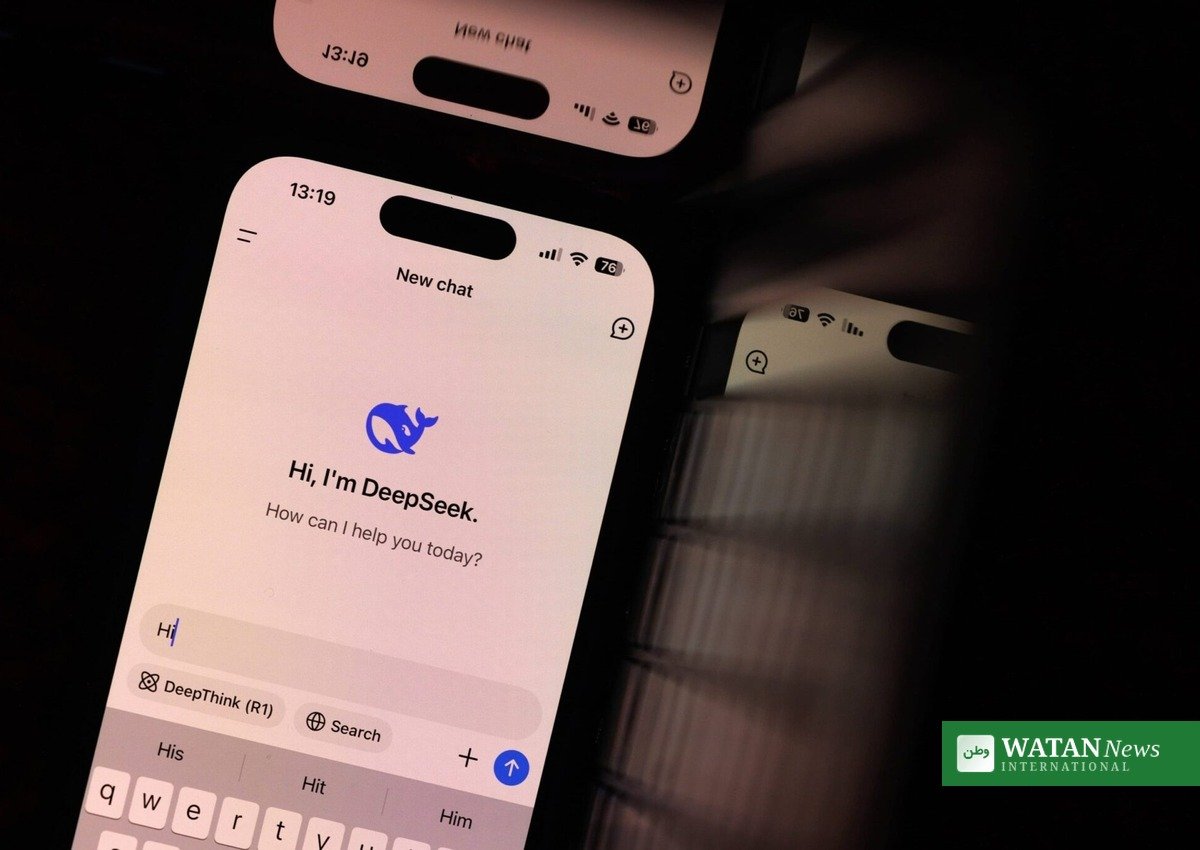
The DHS notice says DeepSeek’s models present “multiple threat vectors” and warns that their use “may result in the transfer of sensitive data to [China] if used by US government employees or vendors”. Officials pointed to DeepSeek’s servers being located in China, where the legal system gives the government “extensive authority” to access private company infrastructure. The department also pointed to security vulnerabilities identified in DeepSeek’s iOS application.
What the DeepSeek Government Ban Covers
The order goes further than DeepSeek’s own apps: it covers third-party products and services built using DeepSeek’s technology, including its API and coding tools. Agencies may seek exemptions through the Cybersecurity and Infrastructure Security Agency within 60 days. The directive applies to civilian agencies — including the departments of Treasury, Justice, State, and Agriculture — but not to the military or intelligence services, which were already restricted under a December 2025 law.
The restrictions took effect upon publication of the order, expanding earlier US limits on DeepSeek that had included bans within the Commerce Department and parts of the defence and intelligence community. Australia banned DeepSeek from government systems and devices in February 2025.
China Pushes Back: “Take All Necessary Measures”
China’s commerce ministry said on Tuesday that it was “strongly dissatisfied and firmly opposes” the order, urging Washington to “immediately correct wrong practices … and revoke relevant discriminatory restrictive measures”. Beijing said it would closely monitor developments and “take all necessary measures” to safeguard the interests of Chinese companies.
“China has consistently opposed the overstretching of the concept of national security,” Foreign Ministry spokesperson Mao Ning told a news conference. Beijing said the move disregards understandings reached between the two countries’ leaders and politicises scientific, technological and trade issues.
The Bigger US-China AI Race
DeepSeek, one of China’s leading AI developers, shook the industry in January 2025 with a low-cost, high-performance chatbot that challenged assumptions of US dominance in artificial intelligence. The company released its V4 model in April and this month updated a faster, lighter version.
Washington has accused DeepSeek and other major Chinese AI companies of systematically obtaining capabilities from advanced AI models developed by American competitors — a charge Beijing rejects. Despite the rivalry, China and the United States agreed in September to set up a “communication channel” for AI incidents, and the topic is expected to come up again when the countries’ leaders meet next month at a summit in the Chinese city of Shenzhen.
| Scope | Detail |
|---|---|
| Who is affected | 102 civilian federal executive branch agencies |
| What is banned | DeepSeek products, affiliates, and third-party services using its models |
| Exemptions | Agencies may apply via CISA within 60 days |
| Not covered | Military and intelligence services (already restricted under Dec 2025 law) |
Related Articles
- China’s Q3 GDP Grows 4.5%, Beating Forecasts, as Oil Prices Ease From Five
- China Tracks US Warship USS Charleston Near Disputed Sabina Shoal
Conclusion
The DeepSeek government ban marks a new front in the US-China technology rivalry, extending Washington’s scrutiny from chips and networks to the AI tools government employees use every day. With Beijing vowing retaliation and the two leaders due to meet in Shenzhen next month, the dispute over one Chinese chatbot has become a test of whether the two powers can keep their fragile AI dialogue on track.
Frequently Asked Questions
What exactly has the US banned?
Civilian federal agencies must remove DeepSeek products and any third-party services built using its AI models from their IT systems, and may not buy new ones.
Why is DeepSeek considered a risk?
The Department of Homeland Security says the models present “multiple threat vectors” and warns that use by employees or contractors could expose sensitive data, since DeepSeek’s servers are in China.
Does the ban apply to everyone in the US?
No. It applies to civilian federal agencies only — it does not ban DeepSeek for the general public, and the military and intelligence services were already separately restricted.
Can agencies get exemptions?
Yes. Agencies may seek exemptions through the Cybersecurity and Infrastructure Security Agency within 60 days.
How did China respond?
China’s commerce ministry said it was “strongly dissatisfied and firmly opposes” the order and vowed to “take all necessary measures” to protect Chinese companies.
Why does this matter beyond one company?
The ban deepens the US-China AI rivalry just weeks before a leaders’ summit in Shenzhen, and follows earlier bans on DeepSeek by US defence agencies and Australia.
Author

usman2344913@gmail.com
Related Posts
Malaysia De-registers Main Opposition Coalition Perikatan Nasional Ahead of Key Elections
- 0
- 678 words
Malaysia’s Registrar of Societies (RoS) has cancelled the registration of Perikatan Nasional (PN), the country’s main opposition coalition, dealing a blow to...
Read out all
Rubio Says US-India Trade Deal Is ‘Very, Very Close’ After Mumbai Talks
- 0
- 890 words
US Secretary of State Marco Rubio said in Mumbai that a US India trade deal is "very, very close", with only a...
Read out all
Netflix Leadership Shakeup Deepens as Film Chief Dan Lin Exits Before Q3 Earnings
- 0
- 769 words
Netflix's leadership shakeup deepened as film chief Dan Lin exited days after content chief Bela Bajaria's departure, with 1,000 layoffs and third-quarter...
Read out all
WHO: Inequality Is a Major Factor in the Impact of Noncommunicable Diseases
- 0
- 751 words
Inequality is a major factor shaping who falls ill and who gets care from noncommunicable diseases, the World Health Organization says in...
Read out all
India’s Rice Production Set for First Decline in a Decade After Weak Monsoon
- 0
- 725 words
India's rice production is set to fall this year for the first time in a decade — and by the most in...
Read out all
Trump Open to Trilateral Summit With Putin and Xi on Ukraine War
- 0
- 1,096 word
Donald Trump says he is open to a trilateral Ukraine summit with Vladimir Putin and Xi Jinping, proposed by Putin for the...
Read out all