- 0
- 2,274 words
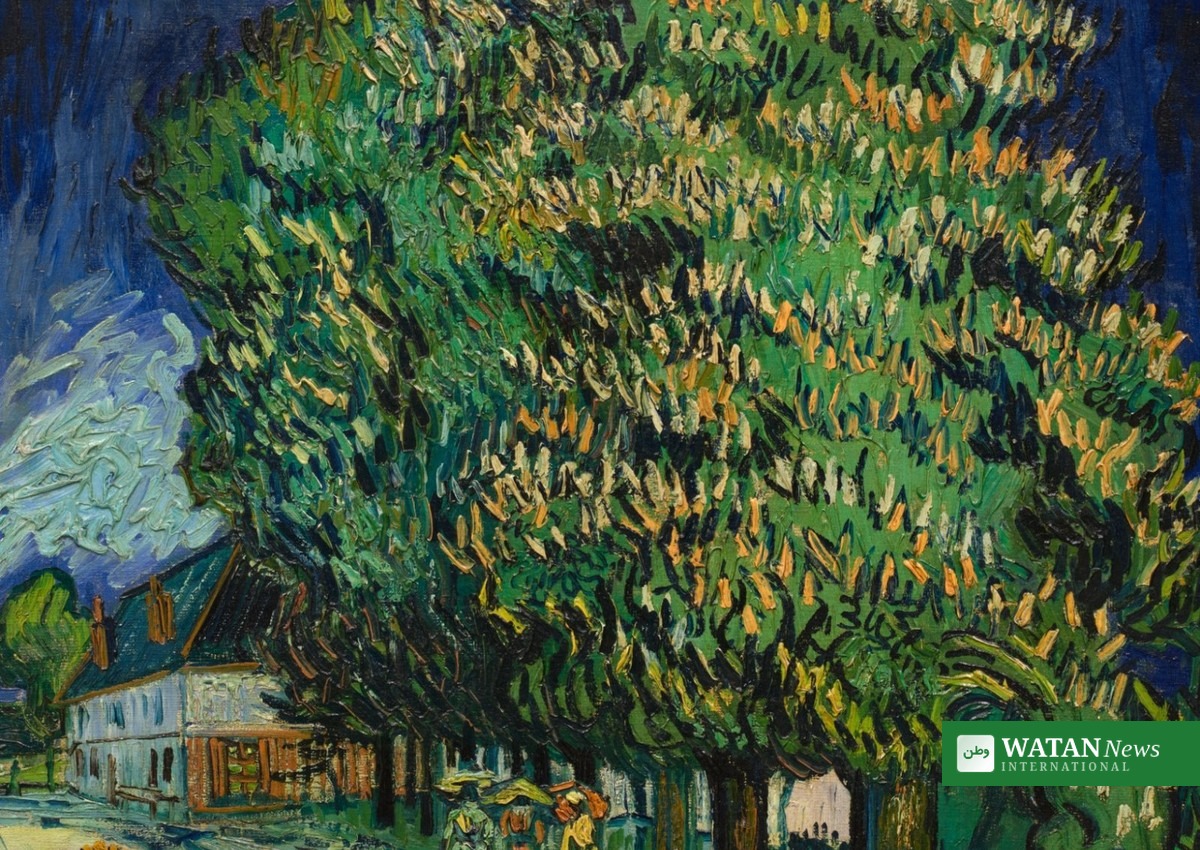
Vincent van Gogh’s Blossoming Chestnut Trees has sold for $190.4 million at Sotheby’s in New York, setting a new auction record for the Dutch artist and becoming one of the most expensive paintings ever sold at auction. The Van Gogh chestnut trees record sale took place on Wednesday, 18 November 2026, after nearly five minutes of bidding in a packed saleroom, and it went ahead only a day after a last-minute settlement resolved a dispute over the painting’s ownership during the Nazi era.
The 1890 canvas, known in French as Châtaigniers en fleurs, was the star lot of the evening and the most valuable painting offered by any of New York’s auction houses this season. It hammered at $165 million before fees, below its estimate of around $180 million, yet still sailed past Van Gogh’s previous auction record by more than $73 million. The winning bidder, veteran New York art dealer William Acquavella, was in the room as the gavel fell.
FAKTA
- Painting: Blossoming Chestnut Trees (Châtaigniers en fleurs), Vincent van Gogh, 1890, oil on canvas, 70 x 58 cm.
- Sale price: $190.4 million including fees; hammer price $165 million.
- Where and when: Sotheby’s, New York, Wednesday 18 November 2026, in the “Legendary: The Blaquier-Arrieta Collection” evening sale.
- Buyer: William Acquavella, head of Acquavella Galleries, bidding in the saleroom.
- Record: The highest price ever paid at auction for a Van Gogh, and the fourth most expensive painting ever sold at auction.
- Previous record: $117.2 million for Orchard with Cypresses (1888), sold at Christie’s in New York in 2022.
- Seller: The estate of Nelly Arrieta de Blaquier, the Buenos Aires sugar heiress, whose collection of 12 works realised $412 million in total.
The Van Gogh Chestnut Trees Record Sale: A Record Night in New York
The bidding opened at $135 million and climbed in $5 million steps, with two bidders contesting the work before Acquavella secured it. The result made Blossoming Chestnut Trees the second most expensive object ever sold at Sotheby’s, behind only Gustav Klimt’s Portrait of Elisabeth Lederer, which fetched $236.4 million in November 2025. Only three paintings have ever sold for more at auction: Leonardo da Vinci’s Salvator Mundi at around $450 million in 2017, the Klimt portrait, and Andy Warhol’s Shot Sage Blue Marilyn at $195 million in 2022.
The Van Gogh was the centrepiece of a remarkable evening for Sotheby’s. Two back-to-back evening sales on 18 November brought in a combined $777.8 million including fees, the auction house’s highest total for a single evening, surpassing the $706 million achieved during comparable sales last November. The Blaquier-Arrieta collection itself realised $412 million across its 12 lots, although that fell short of its overall estimate of about $450 million, with six of the 12 works selling below their low estimates.
The sale also underlined how the very top of the art market continues to defy wider economic uncertainty. Even though the hammer price came in below the $180 million estimate, the final figure with fees still set a record by a wide margin, and the evening produced new auction records for several other artists as well.
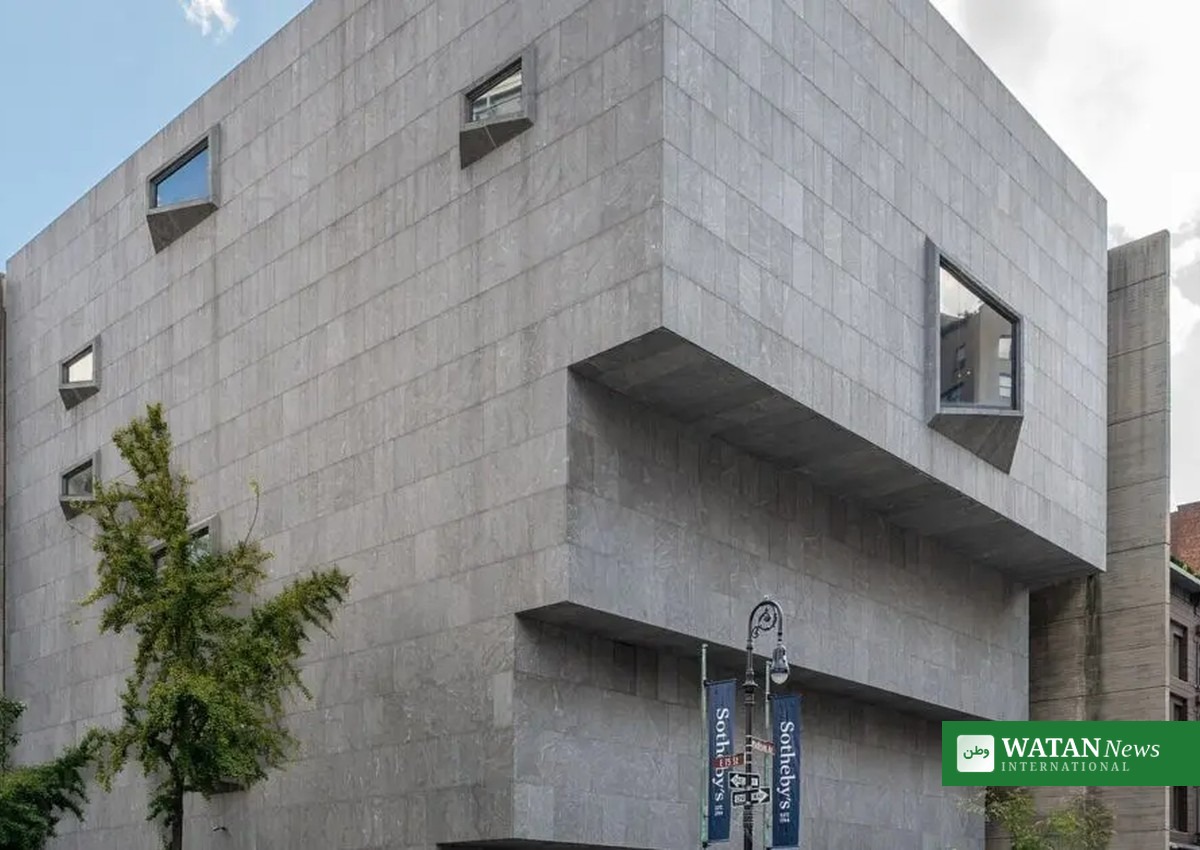
Sotheby’s headquarters at 945 Madison Avenue in New York, where the record-breaking Van Gogh sale was held on 18 November 2026.
The Painting: Van Gogh’s Final Spring
Blossoming Chestnut Trees was painted in May 1890 in Auvers-sur-Oise, the small village north of Paris where Van Gogh spent the final months of his life. According to Sotheby’s, the work was painted on 24 May 1890, just four days after the artist arrived in the village. He died about two months later, in July 1890, which makes the canvas one of his very last paintings.
The picture shows a sunlit village street lined with flowering chestnut trees, their green canopies flecked with white and yellow blossom against an intense blue sky. Three women carrying Japanese-inspired parasols walk beneath the trees, while a figure in blue and a straw hat stands at the left of the composition. The painting’s bright, spring-like mood stands in contrast to the darkness of the artist’s final weeks, and it captures the light and colour of the French countryside that Van Gogh found so inspiring in his last productive burst.
For decades the painting was hidden from public view, held in the private collection of Nelly Arrieta de Blaquier and her late husband, Carlos Pedro Blaquier. The couple, who built their fortune in Argentina’s sugar industry, began collecting Impressionist and modern masterpieces in the 1960s and assembled one of the finest private collections of its kind in South America.
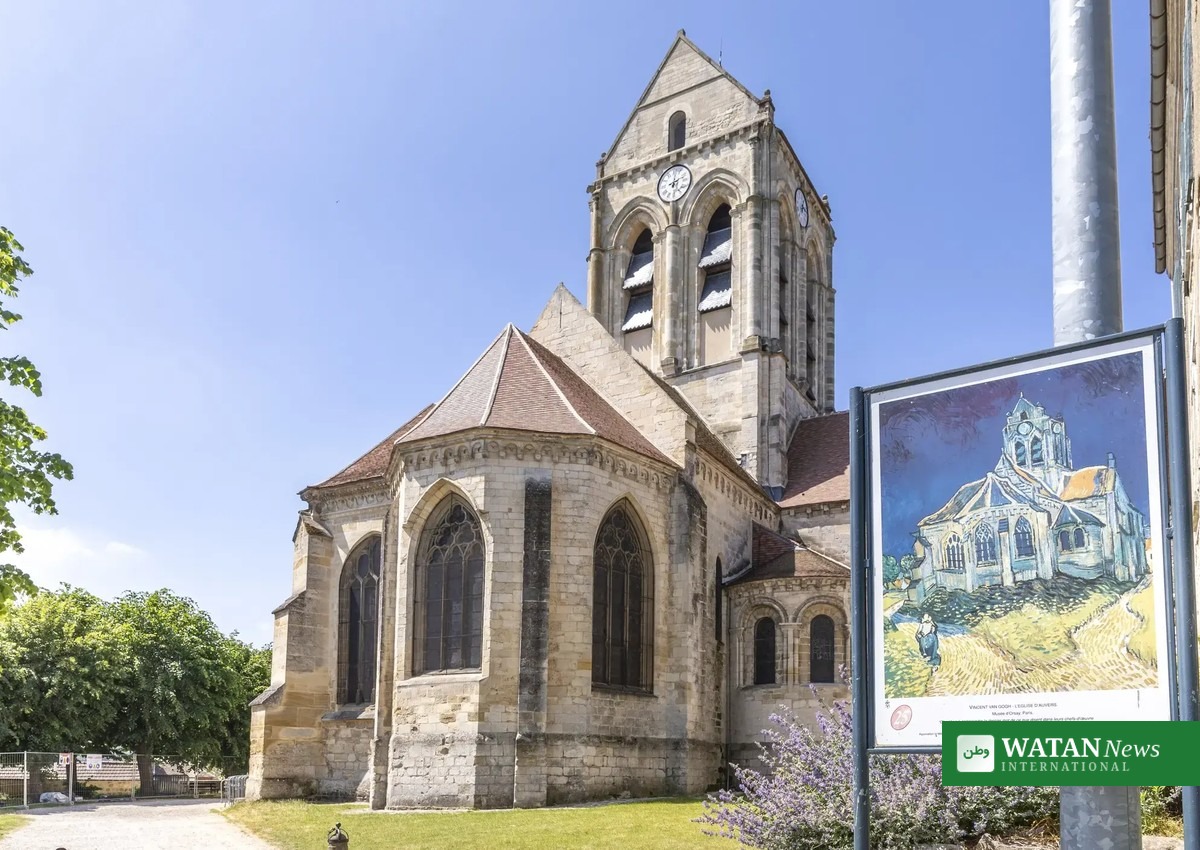
The Church of Auvers-sur-Oise, in the village where Van Gogh painted Blossoming Chestnut Trees in the final months of his life. A panel beside the church reproduces his painting of it.
Why Auvers-sur-Oise mattered to Van Gogh
Auvers-sur-Oise was Van Gogh’s last home. He moved there in May 1890 on the advice of his brother Theo, and in the roughly ten weeks before his death he produced an extraordinary number of works, including some of his best-known paintings of village streets, wheatfields and the local church. The village has since become a place of pilgrimage for art lovers from around the world, and many of the scenes he painted there can still be recognised today.
A Troubled History, Settled at the Last Hour
The record price came with a complicated history. Before the sale, the painting had been the subject of a dispute over its ownership during the Nazi era in Germany. It once belonged to Samuel Fischer, a German Jewish publisher, and his wife Hedwig, who bought the work in 1909. Their heirs claimed that the painting had been sold under duress in the 1930s, during the persecution of Jewish families by the Nazis.
Just one day before the auction, Sotheby’s announced that a settlement had been reached between the Blaquier heirs and the Fischer heirs, allowing the sale to go ahead. The agreement was confidential, and the terms were not disclosed, but it removed the legal cloud that had hung over the painting and cleared the way for the record result. The episode is a reminder of how many great works of art still carry unresolved histories from the 1930s and 1940s, and of the growing role that restitution agreements now play in the art market.
The painting’s earlier provenance is well documented. After leaving Van Gogh’s brother Theo and his widow Johanna van Gogh-Bonger, it passed through the hands of the Berlin dealer Paul Cassirer in 1905, the Prince of Wagram in 1906 and the collector Gustave Fayet, before Samuel Fischer acquired it from the Paris dealers Bernheim-Jeune in 1909.
The Collection Behind the Sale
The Van Gogh was the leading lot in a dedicated sale of the Blaquier-Arrieta collection, billed by Sotheby’s as the most valuable collection to come to auction in New York this season. Nelly Arrieta de Blaquier, who died in 2020, and her husband Carlos Pedro Blaquier, who died in 2023, spent decades building a collection of Impressionist and modern works that was rarely seen in public.
The sale’s second major lot was Paul Cézanne’s Arlequin (1888-90), the last of the artist’s four Harlequin paintings still in private hands. It hammered at $99 million, or $111 million with fees, below its $120 million estimate, and it did not beat Cézanne’s auction record of $138 million, set in the same 2022 Paul Allen sale at Christie’s that produced Van Gogh’s previous record. Even so, it became the most valuable Cézanne painting from the Harlequin series ever sold at auction.
Only one work in the collection exceeded its estimate: Camille Pissarro’s Maison de Piette à Montfoucault, effet de neige (1875), which hammered at $1.62 million, or $2 million with fees, against an estimate of $700,000 to $900,000.
A Strong Night Beyond Van Gogh
The Modern Evening sale that followed immediately afterwards generated a further $365.8 million with fees, against an overall estimate of $260.2 million to $378.4 million. Its top lot was René Magritte’s L’Ami de l’ordre (1964), which combines the artist’s signature bowler-hatted figure with a night landscape. It hammered at $39 million, or $45.5 million with fees, far above its $25 million to $35 million estimate, and became the most valuable Magritte painting featuring a bowler hat ever sold at auction.
One of the evening’s most striking results came from the Harlem Renaissance artist Aaron Douglas, whose Harriet Tubman (1931) shattered his previous auction record. The painting, which shows the American abolitionist breaking a chain, had been estimated at $2.5 million to $3.5 million. After a seven-minute bidding battle, it hammered at $12 million, or $14.48 million with fees, far above Douglas’s previous record of $600,000, set in 2008. The proceeds will benefit Bennett College, one of only two historically Black women’s colleges in the United States.
Mary Cassatt also set a new auction record when Summertime (1894-95) hammered at $11 million, or $13.3 million with fees, against a $7 million to $10 million estimate. The painting came from the collection of the late oil tycoon Armand Hammer, with the proceeds benefiting his foundation.
What the Result Says About the Art Market
The Van Gogh sale offers a mixed picture of the art market in late 2026. At the very top, demand for rare masterpieces with strong provenance remains intense, and the evening’s $777.8 million total was a record for Sotheby’s. Yet the bidding was uneven: just over a third of the works sold below their pre-sale estimates, one lot failed to sell, and three further works were withdrawn during the sale.
That pattern suggests a market that is selective rather than overheated. Buyers are willing to pay record prices for the finest works by the most famous names, particularly when a painting has been off the market for decades, but they are less willing to chase works that carry high estimates or uncertain histories. The last-minute settlement over the Van Gogh’s provenance also shows how important a clear title has become: without it, even a masterpiece by one of the world’s best-loved artists might never have reached the rostrum.
For Van Gogh himself, the result cements a remarkable position. More than 135 years after his death, and after a lifetime in which he sold almost nothing, his paintings now command some of the highest prices in the history of art. The $190.4 million paid for Blossoming Chestnut Trees is more than $73 million above his previous record, and it places a quiet village scene from his final spring among the most valuable paintings ever sold.
Conclusion
The sale of Blossoming Chestnut Trees for $190.4 million is a landmark moment for the art world: a new auction record for Van Gogh, the fourth most expensive painting ever sold at auction, and the centrepiece of a record evening for Sotheby’s. It is also a story about the painting itself — a radiant image of spring painted in the last weeks of a troubled life — and about the long, sometimes painful journey that great works of art take through history before they reach the auction room. After decades out of sight, Van Gogh’s chestnut trees in blossom have returned to public attention in the most dramatic way possible.
Related Articles
Read more from Watan News on culture, film and the arts:
- ‘Hunger Games’ Prequel Scores $56 Million Opening Day
- M. John Harrison, 81, Wins 2026 Booker Prize for The End of Everything
- Tearful Phil Collins Steals the Show as Rock Hall Welcomes Class of 2026
- Unopened Five-Star Covent Garden Hotel’s Designer Interiors Go to Auction
- Van Gogh’s Blossoming Chestnut Trees Sells for Record $190.4 Million at Sotheby’s
Frequently Asked Questions
How much did Van Gogh’s Blossoming Chestnut Trees sell for?
The painting sold for $190.4 million including fees at Sotheby’s in New York on 18 November 2026. The hammer price was $165 million, and the buyer’s premium and fees brought the total to $190.4 million.
Is $190.4 million a record for a Van Gogh painting?
Yes. It is the highest price ever paid at auction for a work by Vincent van Gogh, beating the previous record of $117.2 million paid for Orchard with Cypresses (1888) at Christie’s in New York in 2022.
Who bought Blossoming Chestnut Trees?
The painting was bought by William Acquavella, the head of the New York gallery Acquavella Galleries. He was bidding in the saleroom at Sotheby’s in New York when the gavel fell.
When was Blossoming Chestnut Trees painted?
Van Gogh painted it in May 1890 in Auvers-sur-Oise, a village north of Paris. Sotheby’s dates the work to 24 May 1890, about two months before the artist’s death in July 1890, making it one of his last paintings.
Why was the sale almost stopped?
The heirs of Samuel Fischer, a German Jewish publisher who owned the painting before the Second World War, questioned whether it had been sold under duress during Nazi persecution in the 1930s. A settlement between the Fischer heirs and the sellers was reached just one day before the auction, allowing the sale to proceed.
Where does the sale rank among the most expensive paintings ever sold?
It is the fourth most expensive painting ever sold at auction. Only Leonardo da Vinci’s Salvator Mundi (around $450 million), Gustav Klimt’s Portrait of Elisabeth Lederer ($236.4 million) and Andy Warhol’s Shot Sage Blue Marilyn ($195 million) have sold for more.
Who sold the painting?
The seller was the estate of Nelly Arrieta de Blaquier, a Buenos Aires sugar heiress who, with her late husband Carlos Pedro Blaquier, built a major collection of Impressionist and modern art from the 1960s onwards. The 12-work collection realised $412 million in total at Sotheby’s.
Can the public see Blossoming Chestnut Trees?
Not at present. The painting was held in a private collection for decades and has rarely been exhibited in public. Now that it has been sold to a private buyer, it is not known whether it will be lent for public display.
Author

usmanch0013@gmail.com
Related Posts

IGCC Climate Leaders’ Awards 2026 Honour Amanda McKenzie, Guneet Rana and Leilani Weier
- 0
- 807 words
Five climate leaders have been honoured at the IGCC Annual Climate Finance and Investment Summit, with Climate Council chief executive Amanda McKenzie...
Read out all
Venezuela to Repeal Simón Bolívar Law That Barred Opposition From Public Office
- 0
- 593 words
Venezuela's National Assembly will begin repealing the Simón Bolívar Law, which barred opposition figures from public office and carried prison terms of...
Read out all
Serbia’s Student Movement Delays Naming Prime Minister as Deadlines Near
- 0
- 469 words
A month after its landslide election win, Serbia's student-led movement has still not named a prime minister, with budget, refinery and gas...
Read out all
CITIS 2026: New Delhi Summit to Turn Climate Innovation into Bankable Projects
- 0
- 1,014 word
New Delhi hosts the fourth CITIS summit on 14–16 December 2026, where investors and innovators will work on turning first-of-a-kind climate technologies...
Read out all
China Rehearses Amphibious Landing With Civilian Ships Near Taiwan
- 0
- 496 words
China is rehearsing amphibious landings near Taiwan, linking civilian vessels into an 800-metre floating bridge in Dacheng Bay, satellite images show.
Read out all
Pakistan’s First Astronaut Reaches China’s Tiangong Space Station Aboard Shenzhou-24
- 0
- 918 words
Muhammad Zeeshan Ali has become the first Pakistani to reach orbit and the first foreign astronaut to visit China's Tiangong space station,...
Read out all