- 0
- 973 words
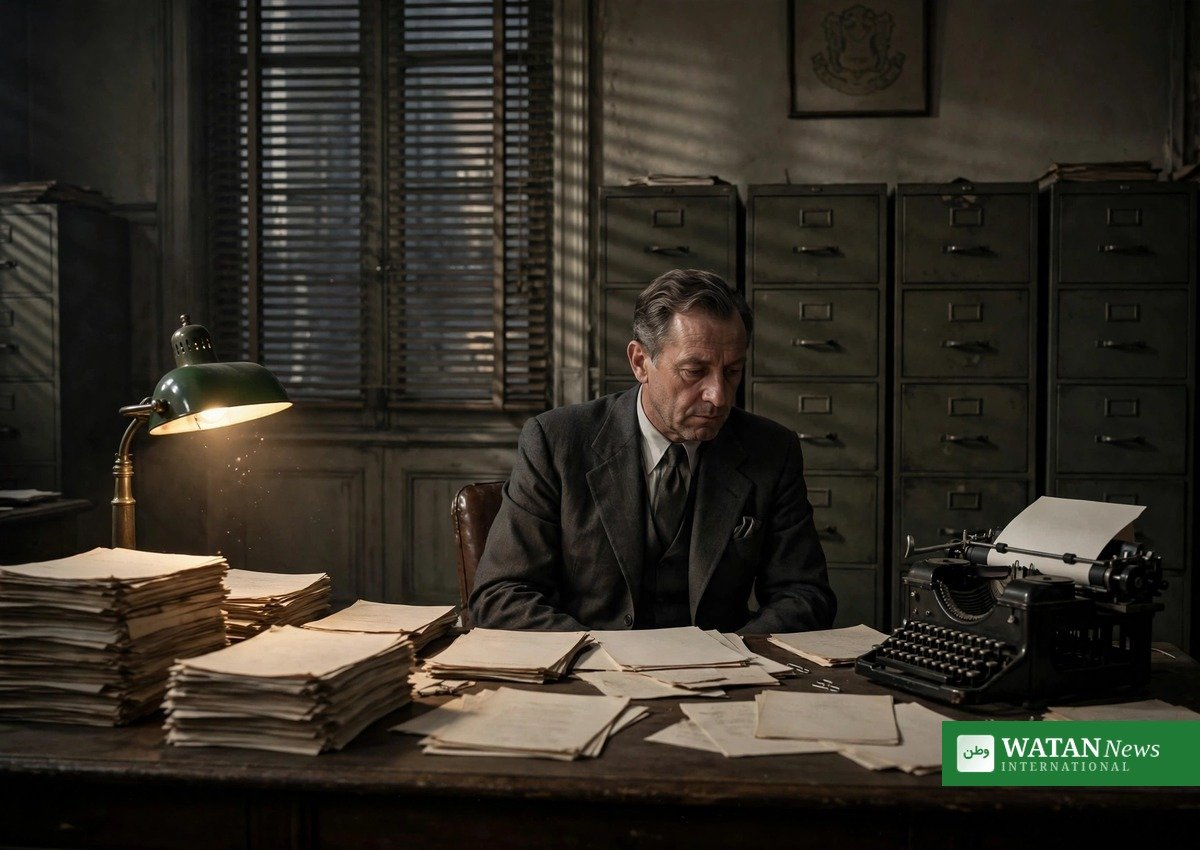
Emmanuel Marre’s Notre Salut (Our Salvation), released internationally as A Man of His Time, is doing what few historical dramas manage: pulling young French audiences into a reckoning with the Vichy regime’s collaboration with the Nazis. The 2026 Franco-Belgian film — winner of the Best Screenplay prize at the 79th Cannes Film Festival — opened in French cinemas on 30 September, and its unflinching portrait of an ordinary bureaucrat inside an authoritarian machine has made it one of the season’s most talked-about releases.
FAKTA: Notre Salut at a Glance
- Film: A Man of His Time (French: Notre Salut, “Our Salvation”) — 2026 Franco-Belgian drama, 155 minutes, in French
- Director: Emmanuel Marre; starring Swann Arlaud as Henri Marre and Sandrine Blancke as Paulette Marre
- Basis: Loosely inspired by Marre’s great-grandfather; shaped by some 300 letters from the director’s own family archives
- Cannes: World premiere in main competition on 20 May 2026; won Best Screenplay, the Prix des Cinémas Art et Essai and a Special Mention from the Prix de la Citoyenneté jury
- French release: 30 September 2026 (Condor Distribution); Belgian release handled by Cinéart
- Signature style: Anachronistic 1980s Europop cues and modern lighting break period-drama convention
Notre Salut’s Modern Take on a Dark Past
Rather than grand battles or famous figures, Marre trains the camera on the mundane machinery of collaboration: a 49-year-old civil servant, Henri Marre (Swann Arlaud), who arrives in Vichy in September 1940 carrying a self-published political manifesto titled — like the film — Notre Salut. Convinced that administrative “efficiency” can rescue France from defeat, he works his way into the new order, and the film follows his slow absorption into a system of complicity.
The film deliberately breaks period-drama conventions. Modern lighting and anachronistic 1980s Europop cues — the soundtrack draws on acts such as Opus and Hot Butter — jolt viewers out of costume-drama comfort. The gesture is widely read as a reminder that the ideological currents running through Vichy France did not politely expire in 1944.

Inspired by Family Letters
Marre drew on roughly 300 letters from his own family archives to shape the film, tracing a fictionalized version of his great-grandfather. Rather than idealizing his family history, he paints a razor-sharp portrait of a man whose convictions bend to whatever serves him best — and of how, in wartime, opportunism curdles into collaboration. The film’s festival run continues: it is slated for its North American premiere at the New York Film Festival, according to Film at Lincoln Center.
Sandrine Blancke co-stars as Paulette Marre, anchoring the emotional distance between private life and political commitment, while the supporting cast includes Mathieu Perotto and Harpo Guit.
Why France Is Watching Now
The release lands in a France doing some hard looking at itself. The 2027 presidential election is on the horizon, and recent Toluna Harris Interactive polling has put Marine Le Pen’s National Rally in the lead at 33–36% in first-round scenarios — a measure of how unsettled the political landscape has become as Emmanuel Macron’s era ends.
There is also a wider cinematic trend. Antonin Baudry’s two-part Charles de Gaulle epic, La Bataille de Gaulle, turned a weak opening into a word-of-mouth phenomenon, passing five million admissions in France — evidence of a real public appetite for confronting the country’s wartime history.
The Bureaucracy of Complicity
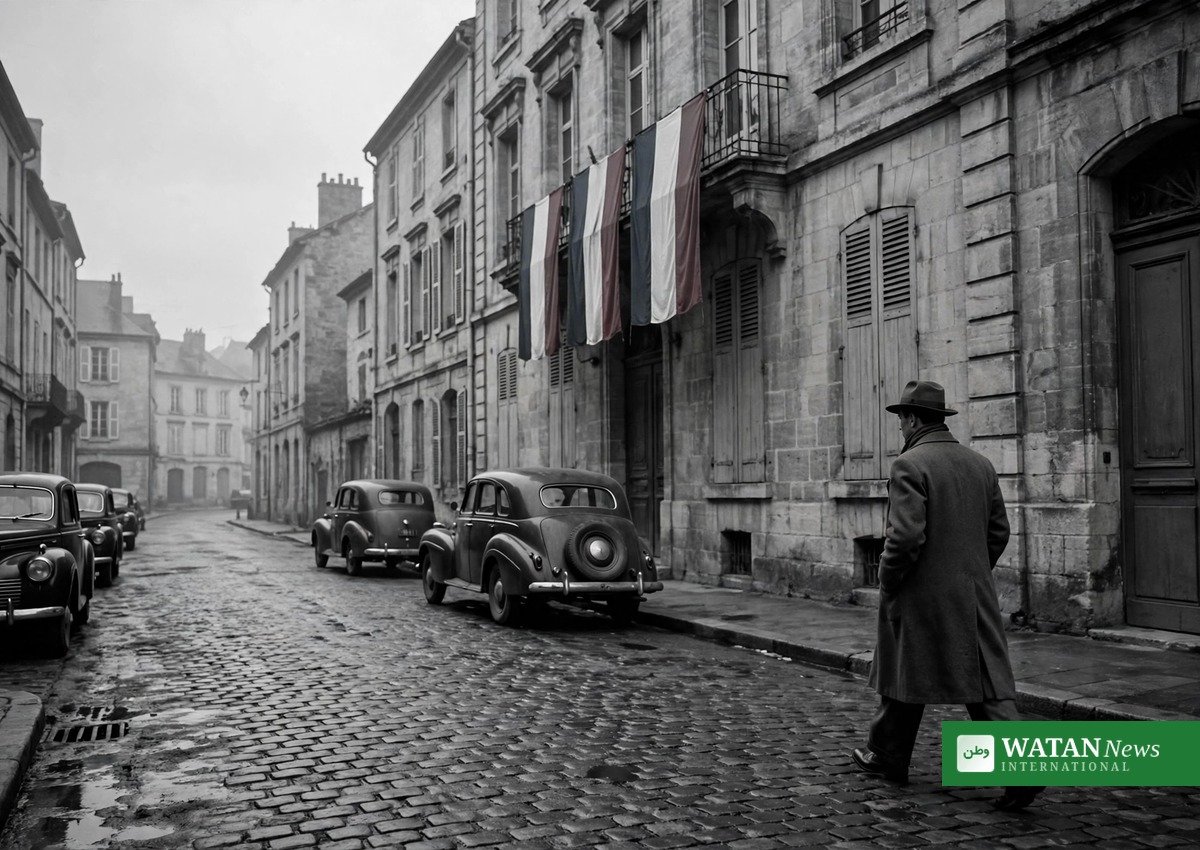
Historians have long stressed that the Vichy regime — the collaborationist government under Marshal Philippe Pétain — functioned through the quiet labor of thousands of ordinary administrators. Under Vichy, some 76,000 Jews were deported from France to concentration and extermination camps. Marre’s film keeps its gaze on the desks, files and timetables that made that machinery run — Hannah Arendt’s “banality of evil” in its unadulterated ordinariness.
That is the film’s provocation: complicity is not only a matter of ideology, but of paperwork, ambition and looking the other way. Personal frustration and the hunger for a place in the system, the film suggests, can be as dangerous as fanaticism.
Conclusion
Notre Salut is not an easy night at the cinema, but it is a necessary one — a reminder that authoritarian systems run on ordinary people doing their jobs. As France heads toward a consequential election, the film asks an uncomfortable, timely question: what do our own small choices add up to?
This story is also published on our main site: Vichy Regime Film Sparks Reflection on France’s Past.
Frequently Asked Questions
What is Notre Salut about?
It is a 2026 French-language drama by Emmanuel Marre, released internationally as A Man of His Time. It follows a Vichy-era civil servant who drifts into complicity with the collaborationist regime, focusing on the everyday bureaucracy of authoritarian rule rather than battlefield heroics.
Is the film based on a true story?
Loosely. Marre was inspired by some 300 letters from his own family archives, and the protagonist Henri Marre is a fictionalized version of the director’s great-grandfather, who served as an administrator under the Vichy regime.
What did it win at Cannes?
The film premiered in the main competition of the 79th Cannes Film Festival on 20 May 2026, where Marre won the Best Screenplay prize. It also received the Prix des Cinémas Art et Essai and a Special Mention from the Prix de la Citoyenneté jury.
When was it released in France?
The film opened theatrically in France and Belgium on 30 September 2026, distributed by Condor Distribution in France. Its runtime is 155 minutes.
Why is the film significant right now?
It arrives as France confronts its past amid political uncertainty ahead of the 2027 presidential election, and alongside a broader wave of interest in WWII-era stories — Antonin Baudry’s two-part de Gaulle epic recently passed five million admissions in France.
Author

usmanjaved13132@gmail.com
Related Posts

Israeli Settlers Torch Olive Trees, Injure Photojournalist in West Bank Harvest Attack
- 0
- 484 words
Dozens of Israeli settlers attacked Palestinian olive harvesters in Abu Falah, West Bank, torching olive trees and injuring two people, including a...
Read out all
Candiru Spyware Ads Planted Zero-Click Spyware on 45 Al Jazeera Devices, Citizen Lab Says
- 0
- 621 words
Researchers have uncovered the first confirmed case of mercenary spyware being delivered to victims through ordinary online advertisements, infecting dozens of devices...
Read out all
Indonesia Forest Fires: Prabowo Approves Foreign Help as Haze Chokes Region
- 0
- 500 words
Indonesia has approved foreign firefighting help as its worst forest fires in a decade choke the region. Hundreds of thousands face breathing...
Read out all
Saudi Coalition Intercepts Cruise Missile Over Medina, Houthis Deny Involvement
- 0
- 678 words
The Saudi-led coalition says it intercepted and destroyed a cruise missile over Medina province on Thursday; the Houthis deny involvement.
Read out all
China Philippines Tensions Rise as Manila Calls Envoy Remarks a Threat
- 0
- 493 words
The China Philippines tensions flared again on Friday after the Philippine government accused Beijing’s ambassador of making what it described as a...
Read out all
Germany Pledges €50 Million for Chernobyl Repair in Ukraine
- 0
- 428 words
Germany pledges €50 million to repair Ukraine's Chernobyl nuclear plant as the G7 raises €260 million for the damaged protective arch ahead...
Read out all