- 0
- 864 words
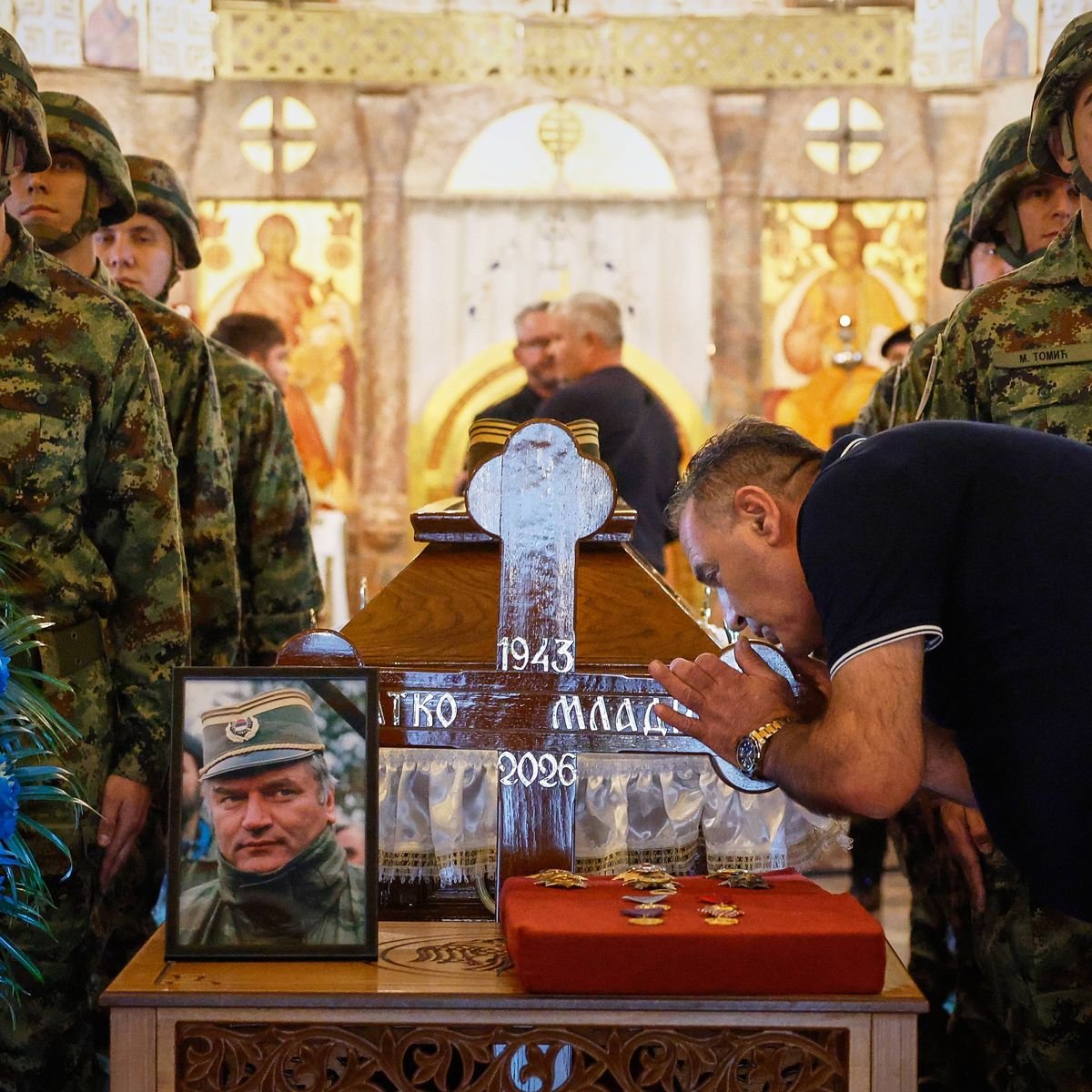
The European Union has condemned the attendance of several senior Serbian officials at the funeral of convicted war criminal Ratko Mladic, with EU leaders describing the event as “shocking” and “deeply regrettable”. The funeral, which took place in Belgrade, was attended by Serbia’s defence and justice ministers, as well as the head of the Serbian Orthodox Church and officials from the Bosnian Serb separatist entity, Republika Srpska.
The EU’s condemnation comes as a significant blow to Serbia’s already strained relations with the bloc, just weeks before the publication of the EU’s annual assessment of membership applicant countries. European Commission President Ursula von der Leyen and European Council President Antonio Costa issued identical statements on X, expressing their disappointment and concern over the presence of senior Serbian officials at the funeral.
- The EU has condemned the attendance of Serbian officials at Mladic’s funeral, citing a failure to confront the dark chapter of Europe’s recent history.
- Serbia’s membership prospects are already under strain due to irregularities in municipal elections and the glorification of Mladic’s legacy.
- The incident has led to a diplomatic row, with Bosnia downgrading its relations with Serbia and recalling most of its embassy staff from Belgrade.
- The EU’s enlargement commissioner, Marta Kos, had previously cancelled a trip to Belgrade in response to the planned tribute to Mladic.
Ratko Mladic’s Legacy
Ratko Mladic, the former Bosnian Serb military leader, was convicted of genocide, war crimes, and crimes against humanity during the 1990s Bosnian War. His legacy is linked to the 1995 Srebrenica genocide, in which forces under his command systematically killed over 8,000 men and boys. Despite his conviction, Mladic remains a hero to many Serbs, and his funeral was attended by thousands of mourners.
EU Reaction
The EU’s reaction to the funeral has been swift and severe, with leaders emphasizing the importance of confronting the dark chapters of Europe’s recent history. “The elements of official support and the presence of some senior Serbian officials at the funeral are deeply regrettable,” said von der Leyen and Costa in their statement. “They demonstrate a failure to confront a dark chapter in Europe’s recent history and contradict the values underpinning Serbia’s path towards the European Union.”
Impact on Serbia’s EU Membership Bid
The incident is likely to have significant implications for Serbia’s EU membership bid, which is already facing challenges due to irregularities in municipal elections and concerns over the country’s commitment to EU values. The EU’s enlargement commissioner, Marta Kos, has warned that Serbia’s access to EU funds could be at risk if the country fails to demonstrate its commitment to the bloc’s values.
Regional Tensions
The funeral has also led to a diplomatic row in the region, with Bosnia downgrading its relations with Serbia and recalling most of its embassy staff from Belgrade. The incident has highlighted the ongoing tensions in the region and the need for reconciliation and dialogue. For more information on this and other news stories, visit Watan News.
Conclusion
In conclusion, the EU’s condemnation of Serbia’s ministers for attending Mladic’s funeral marks a significant blow to the country’s already strained relations with the bloc. The incident highlights the importance of confronting the dark chapters of Europe’s recent history and the need for reconciliation and dialogue in the region.
FAQs
Q1: What led to the EU’s condemnation of Serbia’s ministers?
A1: The EU condemned the attendance of Serbian officials at the funeral of convicted war criminal Ratko Mladic, citing a failure to confront the dark chapter of Europe’s recent history.
Q2: Who attended the funeral of Ratko Mladic?
A2: The funeral was attended by Serbia’s defence and justice ministers, the head of the Serbian Orthodox Church, and officials from the Bosnian Serb separatist entity, Republika Srpska, including President Sinisa Karan.
Q3: What are the implications for Serbia’s EU membership bid?
A3: The incident is likely to have significant implications for Serbia’s EU membership bid, which is already facing challenges due to irregularities in municipal elections and concerns over the country’s commitment to EU values.
Q4: How has the incident affected regional relations?
A4: The funeral has led to a diplomatic row in the region, with Bosnia downgrading its relations with Serbia and recalling most of its embassy staff from Belgrade.
Q5: What is the EU’s stance on the glorification of Mladic’s legacy?
A5: The EU has emphasized the importance of confronting the dark chapters of Europe’s recent history and has condemned the glorification of Mladic’s legacy, which is seen as contradicting the values underpinning Serbia’s path towards the European Union.
Q6: What is the significance of the Srebrenica genocide in this context?
A6: The Srebrenica genocide, in which forces under Mladic’s command systematically killed over 8,000 men and boys, is a significant event in the context of the EU’s condemnation of Serbia’s ministers. The genocide is seen as a dark chapter in Europe’s recent history, and the EU’s reaction to the funeral highlights the importance of confronting and learning from such events.
Author

usmanjaved13132@gmail.com
Related Posts
Deadly Clashes Erupt Along Sudan-South Sudan Border, Killing at Least 26
- 0
- 503 words
At least 26 people have been killed and 82 others injured in days of intercommunal fighting in a disputed region on the...
Read out all
Foreign Secretary Holds Farewell Interaction with Diplomatic Corps
- 0
- 587 words
Pakistan’s Foreign Secretary, Sohail Mahmood, held a farewell interaction with the diplomatic corps at the Foreign Office in Islamabad, marking the end...
Read out all
COP31 presidency and OECD announce Paris partnership on climate finance and delivery
- 0
- 504 words
President-Designate Murat Kurum frames climate finance as strategic security at OECD headquarters, cites Türkiye’s SURFF urban-resilience facility as an implementation bridge, and...
Read out all
Federal Urdu University launches beginner Russian language course
- 0
- 488 words
The Federal Urdu University of Arts, Science and Technology (FUUAST) has launched a beginner Russian language course. The one month course has...
Read out all
US House passes sweeping Russia sanctions bill, sending it to Trump
- 0
- 684 words
The US House of Representatives on Wednesday approved a sweeping package of sanctions aimed at squeezing Russia’s war economy, sending the legislation...
Read out all
Morocco’s 2026 Election: A Test of Political Trust and Engagement
- 0
- 532 words
Morocco’s 2026 parliamentary election is set to take place on September 23, with 27 political parties vying for 395 seats in the...
Read out all