- 0
- 682 words
US President Donald Trump said Thursday he faces a major decision on whether to resume large-scale military strikes against Iran, as Saudi-Houthi fighting, a tanker strike in the Strait of Hormuz and Chinese diplomacy raised the stakes ahead of next week’s United Nations General Assembly.
In an interview with Axios published Thursday, Trump said: “I have a big decision coming up. Do I want to go in and annihilate them [the Iranian regime] or do I not? It’s a big decision. Anything could happen with me.” He is expected to meet leaders from Saudi Arabia, the United Arab Emirates, Qatar, Bahrain, Kuwait and Oman on the sidelines of the UN gathering in New York before setting the next phase of the war, Axios and subsequent reports said. Trump told Axios he wants to hear directly from Gulf partners, saying Washington has been “very protective of them.”
Axios reported that Trump paused plans for renewed major attacks in August after Saudi Arabia and Qatar warned Iran could retaliate against Saudi energy facilities. Since then, according to Axios accounts carried by Israel National News and The Times of India, Washington has suspended talks with Tehran, expanded sanctions, maintained a naval blockade of Iranian ports and focused military efforts on reopening Hormuz. Trump and Defence Secretary Pete Hegseth have ordered US forces in the Middle East to remain at current levels through year-end, US officials told Axios.
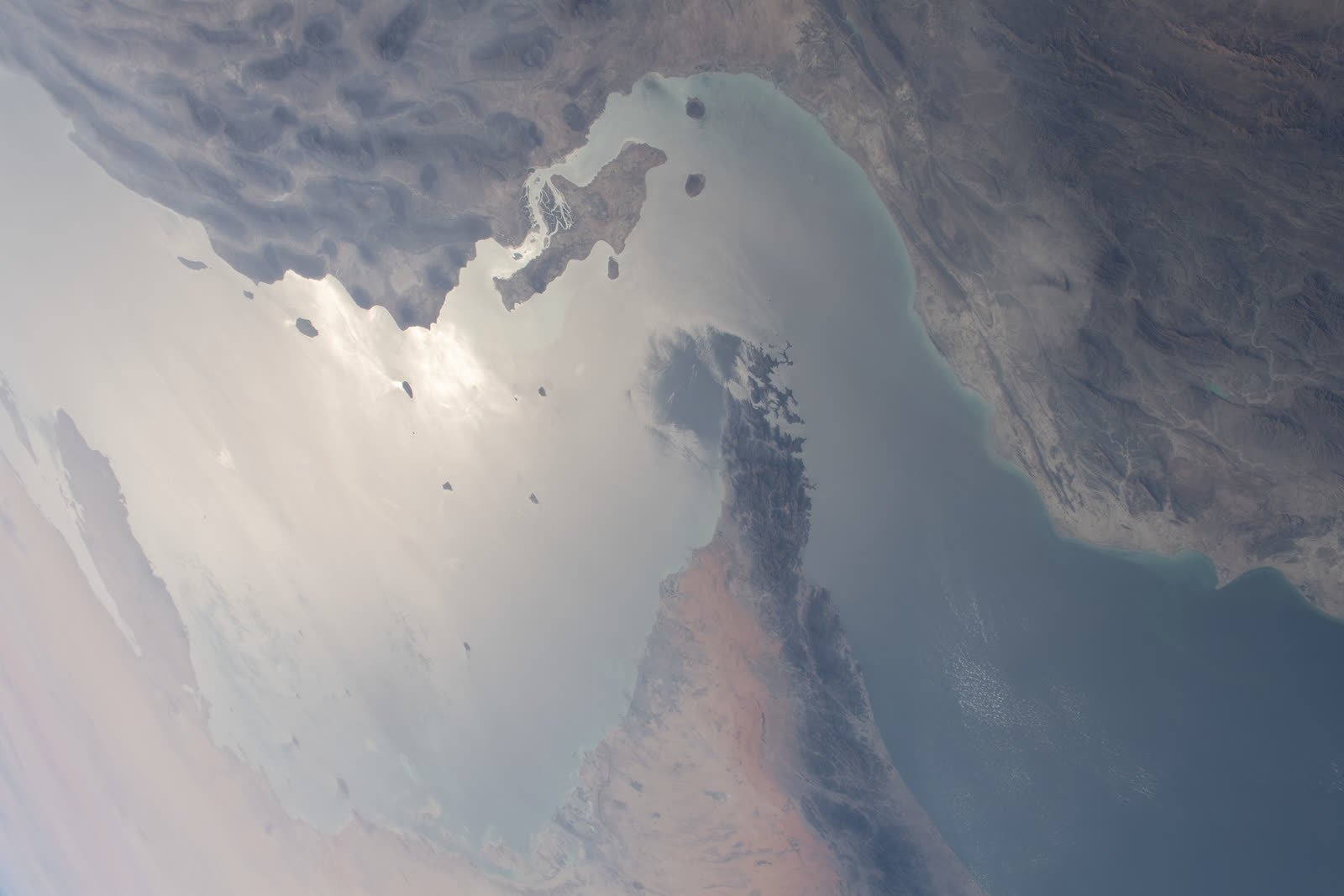
Maritime risks rose again Thursday. Iran’s Islamic Revolutionary Guard Corps Navy said a Togo-flagged oil tanker caught fire after being hit while attempting what it called an “illegal passage” through the Strait of Hormuz, Iranian state media reported, according to Reuters. The tanker came to a halt after the fire, the Guards Navy said. Reuters ship-tracking data cited by Iran International showed only three commodity vessels transited Hormuz on Wednesday, down from 12 a day earlier and well below a recent 10-day average of about 17.
West of Hormuz, the conflict’s spillover deepened. Reuters reported that Saudi Arabia and the Houthis exchanged fresh strikes across their border on Thursday, while Yemenis fled by boat across the Red Sea. Houthi television reported Saudi airstrikes in Hajjah province and around Taiz. Saudi civil defence said a Yemeni resident was killed by debris from a drone intercepted over Taif — the first death Riyadh has announced in the latest wave of attacks, after previously reporting more than 80 wounded. The United States has rebuffed Saudi requests for direct military help against the Houthis, Reuters said.
Diplomacy is moving on parallel tracks. China’s Foreign Minister Wang Yi spoke Thursday with US Secretary of State Marco Rubio after talks in Beijing with Iranian Foreign Minister Abbas Araghchi, China’s Foreign Ministry said, according to Iran International. Wang urged restraint, renewed consultations and the reopening of Hormuz. Reuters, citing Iranian sources, said Beijing has also privately asked Tehran to rein in the Houthis after Riyadh sought Chinese help. Russia and China vetoed a US-drafted UN Security Council resolution to extend a UN panel monitoring sanctions on Iran.
Israeli leaders signaled they do not see the campaign as finished. Prime Minister Benjamin Netanyahu said Israel still had work to complete against Iran and its allies and intended to bring down Iran’s regime; Defence Minister Israel Katz said Israel still had “important goals” to achieve, Iran International reported.
Energy markets remain unsettled. Global crude stayed well above $100 a barrel after recent four-month highs, Reuters said, even as prices eased about 1% on Friday. Average US retail diesel hit a record just shy of $6.40 a gallon on Thursday. The war is expected to feature at the UN General Assembly next week, where the US State Department has said an Iranian delegation will be able to attend. What follows the Gulf consultations will help determine whether Washington intensifies strikes, holds its blockade-and-sanctions approach, or reopens diplomacy.
Featured image credit: Strait of Hormuz separating the United Arab Emirates and Iran, photographed from the International Space Station on 24 March 2021 (NASA / ISS Expedition 64, Photo ID iss064e046338). Wikimedia Commons, public domain (NASA). Illustrative; not a depiction of Thursday’s incidents.
Author

watannews321@gmail.com
Related Posts
Harnessing the Power of Nature: The Growth of Renewable Energy in Pakistan
- 0
- 463 words
Pakistan’s renewable energy sector is experiencing significant growth, with a focus on solar power and wind energy. The country’s government has set...
Read out all
Tragic Blast at Police Complex Mosque in Pakistan: Casualties and Response
- 0
- 398 words
A powerful blast at a police complex mosque in Pakistan has resulted in multiple casualties, according to reports from local authorities. The...
Read out all
Tragic Suicide Attack Near Mosque in Northwest Pakistan: 16 Lives Lost
- 0
- 355 words
A suicide bombing near a mosque in northwest Pakistan has claimed the lives of at least 16 people, in an attack that...
Read out all
Plastic chemicals and health: new evidence dashboard sharpens zero-waste stakes ahead of COP31
- 0
- 363 words
Boston College and Minderoo’s PlasticHealthAware dashboard synthesises evidence linking plastic chemicals to human health harms — raising stakes for zero-waste and circular-materials...
Read out all
Unveiling the Glamour: Must-See Fashion Events of 2026
- 0
- 544 words
The fashion world is gearing up for another exciting year, with a plethora of fashion events lined up for 2026. From the...
Read out all
Discover Bawah Resort: A Beautiful Escape in Riau, Indonesia
- 0
- 514 words
Nestled in the Riau Islands of Indonesia, Bawah Resort is a hidden gem that offers a tranquil and luxurious getaway from the...
Read out all