- 0
- 1,367 word
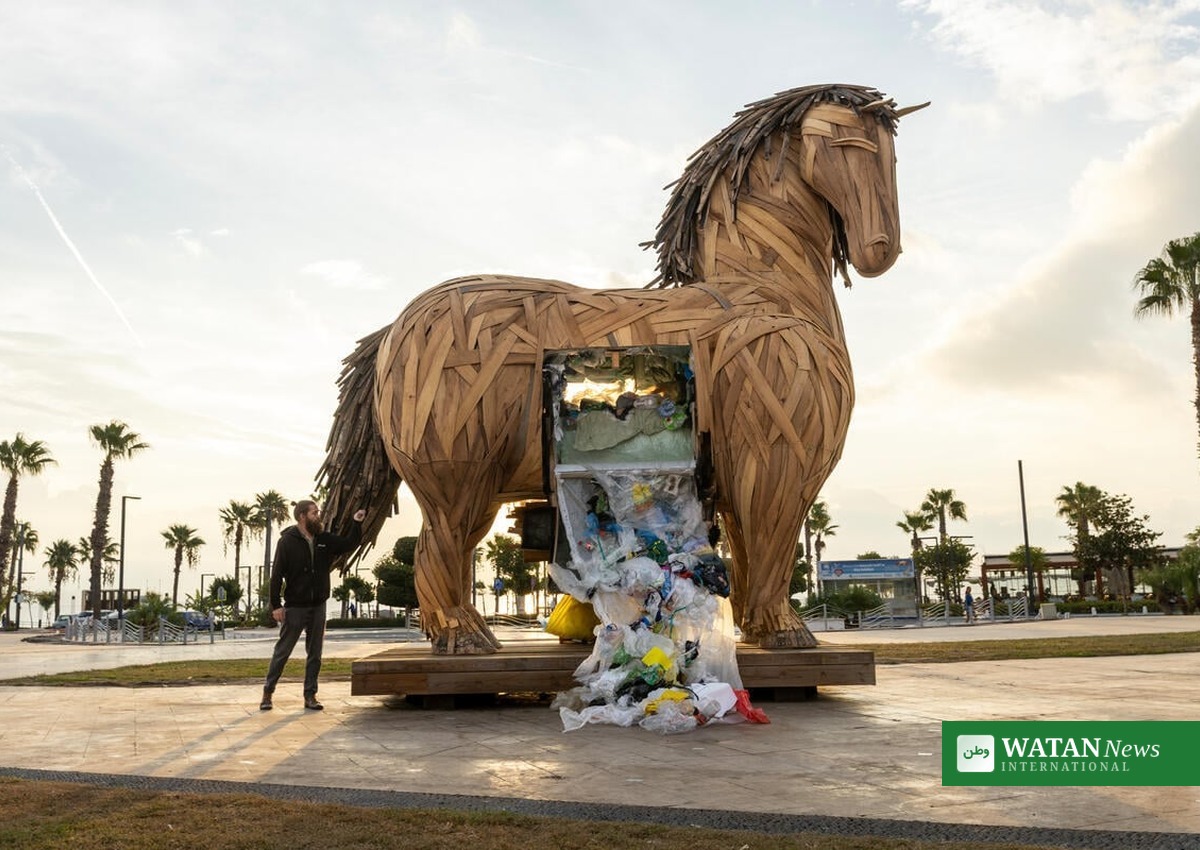
ANTALYA: A six-metre wooden Trojan Horse spilling plastic waste stood on the Konyaaltı waterfront in Antalya on Thursday, as Greenpeace pressed delegates at COP31 to agree a strong global plastics treaty that cuts production at source. Today, Monday, the European Commission hosts a high-level exchange at the conference on the final phase of the treaty negotiations, ahead of a decisive round of talks in March 2027.
The installation, built with Danish artist Thomas Dambo, is six metres high and four metres wide. A trapdoor in its belly opened and plastic poured out onto the promenade — the campaigners’ image of an industry using plastic to keep the world dependent on oil and gas.
A six-metre horse in Konyaaltı
Greenpeace unveiled the horse on 13 November, during the COP31 climate conference in Antalya. Konyaaltı Mayor Cem Kotan welcomed the installation as a strong appeal to the dignitaries gathered in the city.
“Plastic is Big Oil’s Trojan Horse — a way to keep profiting from fossil fuels and continued climate emissions and pollution,” said Jacob Kean-Hammerson, Greenpeace USA’s global plastics policy lead. Artist Thomas Dambo said the horse “reveals what everyday plastic conceals: its connection to oil and gas”, adding that “a healthier climate means cutting plastic production”.
Berk Butan of Greenpeace Türkiye said his country “is promoting its Zero Waste initiative to the world at COP31”, but added: “A comprehensive Zero Waste policy requires placing limits on plastic production and closing borders to other countries’ plastic waste.”
Today’s exchange in Antalya
The European Commission’s high-level exchange takes place today, Monday 16 November, from 13:00 to 14:20 local time in Antalya (11:00–12:20 Central European Time), in hybrid form at COP31 and on YouTube. Titled “Together to find common ground — high-level exchange on the final phase of the Plastics Treaty negotiations”, it brings together ministers, political leaders, international organisations, businesses, civil society and scientists to review progress ahead of the Intergovernmental Negotiating Committee meeting in March 2027.
Today is COP31’s Science, Industry and Technology day — the first full day of the conference’s second week, when ministers take over the negotiations.

The divide: production cuts or waste management?
The central dispute in the treaty talks is whether the agreement should limit how much plastic is made. More than 100 countries, behind a proposal from Panama, want the treaty to set production-reduction targets. A small bloc of oil-producing states, including Saudi Arabia and Russia, opposes production caps and wants the treaty to focus on waste management only.
The negotiating committee’s chair, Julio Cordano of Chile, circulated a reference document in August 2026, “Aid to Negotiations”, that deliberately avoids the most contentious upstream issues — production and hazardous substances — and focuses instead on standardising mid- and downstream rules such as product design, recycled content, extended producer responsibility and traceability.
Fred Njehu of Greenpeace Africa said COP31 “must deliver real accountability”, adding: “We demand a binding treaty that cuts plastic production at the source, and a commitment to finally make corporate polluters pay.” The campaigners’ position is advocacy, not the conference’s decision: the treaty is negotiated separately from COP31, and oil-producing states argue that better collection, recycling and waste management are the answer.
Key facts
- The installation: a six-metre-high, four-metre-wide wooden Trojan Horse by artist Thomas Dambo, unveiled in Konyaaltı, Antalya, on 13 November 2026.
- Today’s exchange: European Commission high-level event, 16 November, 13:00–14:20 local time in Antalya, ahead of the treaty talks in March 2027.
- Production: the world produces about 400–430 million tonnes of plastic a year, up from 2 million tonnes in 1950; only about 9 per cent of all plastic ever made has been recycled.
- Climate link: the plastics lifecycle generated 1.8 gigatonnes of CO2 equivalent in 2019 — 3.4 per cent of global greenhouse gas emissions — and about 90 per cent of those emissions come from production.
- Fossil link: 98 per cent of single-use plastic produced today is made from petrochemicals.
- Leakage: about 22 per cent of plastic waste ends up in the environment; 19–23 million tonnes leak into aquatic ecosystems every year.
- History: the UN Environment Assembly mandated a legally binding treaty in March 2022; five negotiating rounds since then, including Busan in December 2024 and Geneva in 2025, have ended without agreement.
Why plastic is a climate issue
Plastic is made overwhelmingly from oil and gas, so its climate footprint starts at the wellhead. The OECD estimates that the plastics lifecycle generated 1.8 gigatonnes of CO2 equivalent in 2019, about 3.4 per cent of global greenhouse gas emissions, and that about 90 per cent of those emissions come from production and conversion from fossil fuels. Without new policies, those emissions are projected to more than double to 4.3 gigatonnes by 2060, while plastic production is expected to triple.
The waste side is just as stark. About 22 per cent of all plastic waste ends up in the environment, and 19–23 million tonnes leak into aquatic ecosystems every year — a flow the United Nations says could rise by about 50 per cent by 2040 without urgent action. The OECD projects leakage doubling to 44 million tonnes a year by 2060.
The road to March 2027
The treaty process began when the UN Environment Assembly mandated a legally binding instrument on plastic pollution, including in the marine environment, in March 2022. The Intergovernmental Negotiating Committee has met five times — in Punta del Este, Paris, Nairobi, Ottawa and Busan, where talks ended on 2 December 2024 without agreement — and a further round in Geneva in 2025 also failed.
Informal talks between heads of delegation were held in Bangkok on 27–30 September 2026, with final informal talks planned for January 2027 in Nairobi. The resumed formal session, known as INC-5.4, is scheduled for March 2027, and the chair has said a deal could be adopted then.
At COP31 itself, the plastics question sits in the Action Agenda and side-event track rather than in the negotiated COP decision. The conference’s presidency has set targets to halve the projected growth in global waste generation by 2035 and to raise the global circular-material use rate to at least 15 per cent, from 6.9 per cent today. A side event on curbing emissions by preventing single-use plastics in Latin America and the Caribbean was held on Saturday 14 November. The European Union’s ban on plastic-waste exports to non-OECD countries takes effect on 21 November 2026.
Read more: Europe’s Plastic Waste Casts a Shadow Over Türkiye’s Zero Waste Push at COP31 and COP31 Food Waste Breakthrough Puts Methane and Circularity at the Centre of Zero Waste Day
What happens next
Today’s exchange in Antalya will test whether common ground exists before the January informal talks and the March 2027 session. The treaty itself will not be decided at COP31 — what the conference can deliver is political momentum. Whether the final treaty limits production at source, or confines itself to waste management, will be settled in the negotiating committee, not in Antalya.
Frequently asked questions
What is the Global Plastics Treaty?
It is a legally binding agreement on plastic pollution, including in the marine environment, mandated by the UN Environment Assembly in March 2022. Negotiations have run through five rounds of the Intergovernmental Negotiating Committee since then, without agreement so far, and a resumed session is scheduled for March 2027.
Why a Trojan Horse?
Greenpeace built a six-metre wooden Trojan Horse with artist Thomas Dambo and unveiled it in Konyaaltı, Antalya, on 13 November 2026, during COP31. Its trapdoor opened and plastic poured out — the campaigners’ image of the fossil fuel industry using plastic production to keep the world dependent on oil and gas.
Why do countries disagree about production caps?
More than 100 countries want the treaty to set targets to reduce plastic production, because about 90 per cent of plastics’ climate emissions come from production. Oil-producing states, including Saudi Arabia and Russia, oppose production caps and want the treaty to focus on waste management, collection and recycling instead.
How is plastic a climate issue?
About 98 per cent of single-use plastic is made from petrochemicals. The OECD estimates the plastics lifecycle produced 1.8 gigatonnes of CO2 equivalent in 2019 — 3.4 per cent of global greenhouse gas emissions — and that emissions could more than double to 4.3 gigatonnes by 2060 without new policies.
When will the treaty be decided?
The resumed formal negotiating session, INC-5.4, is scheduled for March 2027, and the chair, Julio Cordano of Chile, has said a deal could be adopted then. Informal talks between heads of delegation are planned for January 2027 in Nairobi, after informal talks in Bangkok in September 2026.
Author

usmanch0013@gmail.com
Related Posts
COP31: Greenpeace’ trojanske hest sætter plastiktraktaten tilbage på dagsordenen
- 0
- 1,390 word
En seks meter høj trojansk hest af træ, der spilder plastikaffald, stod i Konyaalti, Antalya, den 13. november, mens Greenpeace pressede COP31...
Read out all
کاپ31: گرین پیس کا ٹروجن ہارس پلاسٹک معاہدے کو دوبارہ ایجنڈے پر لے آیا
13 نومبر کو کونیا آلتی، انطالیہ میں پلاسٹک کا فضلہ گراتا ہوا چھ میٹر اونچا لکڑی کا ٹروجن ہارس کھڑا تھا، جب...
Read out all
COP31: Afrikas kamp for at tredoble tilpasningsfinansieringen er gået i stå — 120 milliarder dollar eller blot en gennemgang?
- 0
- 1,437 word
Ministre åbner COP31's anden uge uden enighed om tilpasningsfinansiering: Et udkast tilbyder en tredobling til mindst 120 milliarder dollar om året i...
Read out all
کاپ31: موافقت کی مالی معاونت تین گنا کرنے کی افریقی کوشش رکاوٹ کا شکار — 120 ارب ڈالر کا وعدہ یا صرف جائزہ؟
کاپ31 کے دوسرے ہفتے کا آغاز وزرا کے ساتھ ہوا اور موافقت کی مالی معاونت حل طلب ہے: مسودے میں 2035 تک...
Read out all
COP31: Africa’s Push to Triple Adaptation Finance Stalls as Draft Offers a Review Instead of a Pledge
- 0
- 1,346 word
Ministers open COP31's second week with adaptation finance unresolved: a draft text offers tripling to at least $120 billion a year by...
Read out all
Zelensky Says US Raised Donbas Withdrawal for NATO Membership as Ukraine Launches Record Drone Attack
- 0
- 1,146 word
President Volodymyr Zelensky says American negotiators raised the idea of Ukraine withdrawing from Donbas in exchange for NATO membership. The United States...
Read out all